In the two-tiered Washington that is the second administration of US President Donald Trump, the top tier makes non-stop trouble, and the second tries to fix it.
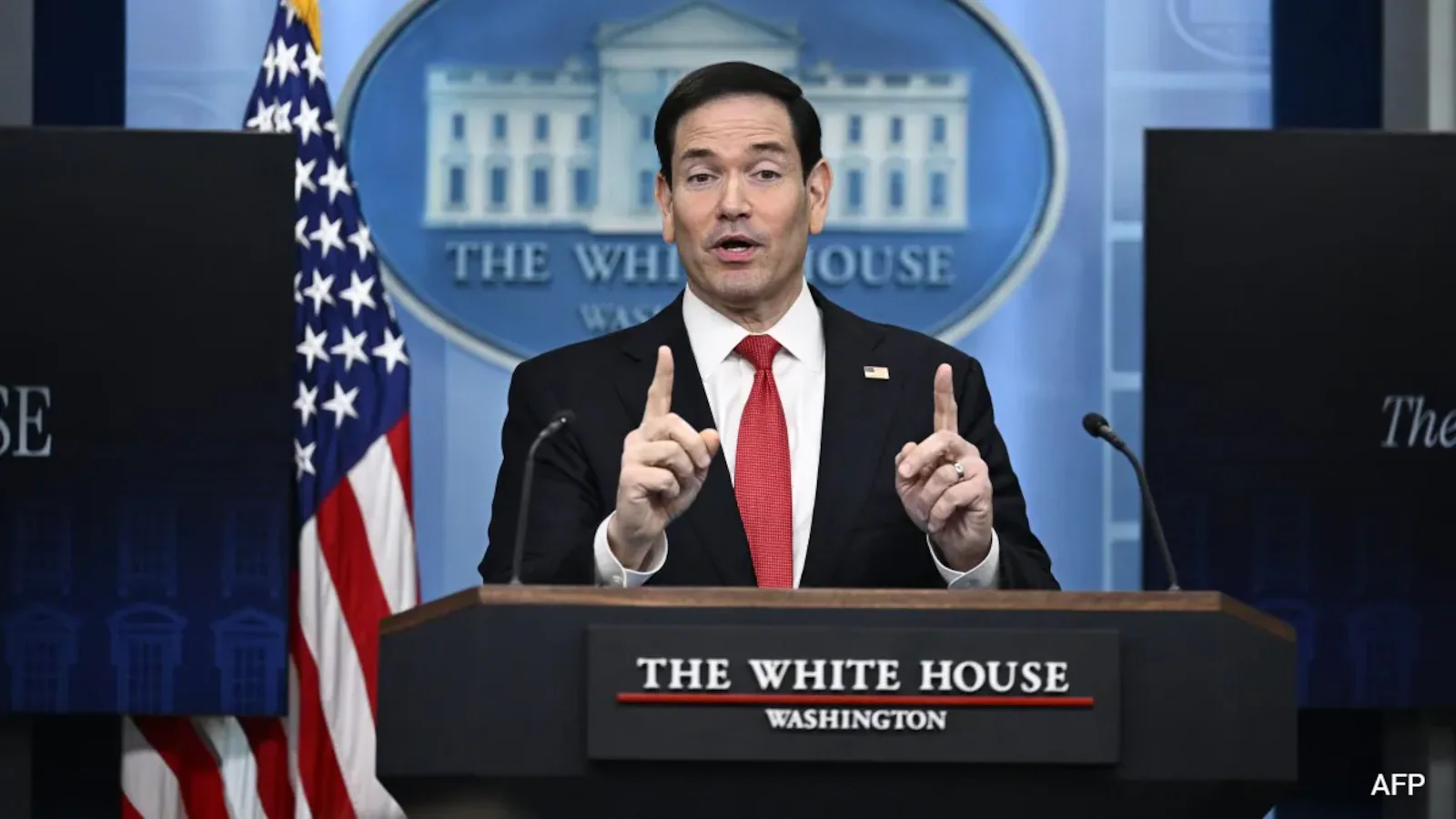
Marco Rubio, secretary of state and national security advisor, has arrived in India on his first visit as “Mr Fix It.” He will attempt to calm Indian nerves and restore a sense that India (still) matters for a myriad geopolitical reasons even if it hasn’t felt that way for one long year. On the side, he will talk business. Selling more US and Venezuelan oil for an India caught in a serious energy crisis caused by Trump’s war against Iran is on his agenda.
The job of select cabinet members is to recreate old friendly feelings, re-package the past and re-sell a future in Trumpian terms. They recognize the need for allies and partners even if their leader doesn’t seem to – only fellow bullies and field marshals get serious presidential attention.
It is in this spirit of repair and maintenance that Rubio’s May 23-26 visit should be seen that takes him to Kolkata, Jaipur, Agra and Delhi. He will find that Indian diplomats have shed sentimentality in the year of living dangerously with Trump. The soft frame has changed — it’s all hardcore. No lofty messaging, no unrealistic promises and no fuzzy expectations from Delhi.
Can Rubio soften the edges and restore greater confidence?
The secretary did quite a job of reassuring the Europeans after Vice President J.D. Vance had berated them at the same venue a year earlier for suppression of free speech and untamed immigration. Rubio may have charmed Europe and celebrated colonialism, empires and missionaries but he raised eyebrows in more than half the world that was colonised. His efforts in India will, no doubt, be more refined because he can be skillful with words.
Because Rubio wears two important hats and spends more time in the White House than any other cabinet member as a result, the conversations in Delhi will be real and substantive. Topics include defence cooperation, trade, the Iran war, the energy crisis, Pakistan, China, and the Quad even if Trump shows no interest in the grouping.
Rubio will attend a Quad foreign ministers’ meeting with his counterparts – S. Jaishankar, Penny Wong of Australia and Toshimitsu Motegi of Japan – on his last day. To show the group is important, he is sure to recall the fact that his first official engagement after being sworn in as secretary of state was to convene Quad ministers who happened to be in DC for Trump’s inauguration.
That said, the failure of Quad to convene at the leaders’ level does raise questions, especially in light of Trump’s overly accommodative stance towards China. The main strategic purpose behind Quad’s revival during the first Trump administration was to build a defensive fence of democracies around China and create options for smaller Asian countries.
That purpose – never explicitly stated but consistently implied – has been obscured somewhat by the recent US-China summit where Trump and Chinese President Xi Jinping announced the start of a “constructive relationship of strategic stability.” The White House repeated China’s formulation which showed how far Trump has gone from competition and confrontation to appease Beijing. Does it mean the arrival of a G-2 world where the two major powers divide and rule, a prospect that India and other Asian countries find disturbing? The jury is out.
Rubio will have answers, but whether they satisfy Quad partners is the question. Yes, the Quad has been operating at the working group level to show that the four (still) want a free and open Indo-Pacific, maritime security, coordination on disaster relief and cooperation on critical and emerging technologies. Officials stress the Quad has survived and will continue to live despite Trump’s disinterest and his tariff war against member countries. They have rustled up a few announcements for the ministers.
On the bilateral front, Rubio is expected to make a strong sales pitch to India to buy more US oil, weapons and small nuclear reactors, ideas that the energetic US ambassador, Sergio Gor, has been relentlessly pushing to keep the partnership alive and on track. His enthusiasm is valuable and his endeavour worthy in these trying times, but hype is never a good idea even if designed for an audience of one in the Oval Office.
Interestingly, Rubio’s visit has aroused the ire of the right wing in both countries with countless angry posts on X. The Americans want him to send back H-1B workers, intervene with the Indian government to crackdown on scammers swindling US citizens from call centres and stop illegal immigration. The Indians want him to stay home since he and his boss like terrorists-loving Pakistanis so much. Vile and acerbic, the posts are a small window into a small segment of both societies.
Pakistan will figure in official talks, and Rubio will get the full Monty on Field Marshal Asim Munir’s Islamist, dangerous, divisive and staunchly anti-India personality. But it won’t change the US calculus because it hasn’t in the past. Trump is enamoured and will likely stay enamoured.
Bottomline: US policy towards Pakistan and China has created difficulties but the India-US relationship will carry forward because both countries find real value in the partnership. The feeling of being besties is gone for the moment.
(Seema Sirohi is a Washington, DC-based columnist and the author of ‘Friends With Benefits: The India-US Story’, a book about the past 30 years of the relationship)
Disclaimer: These are the personal opinions of the author