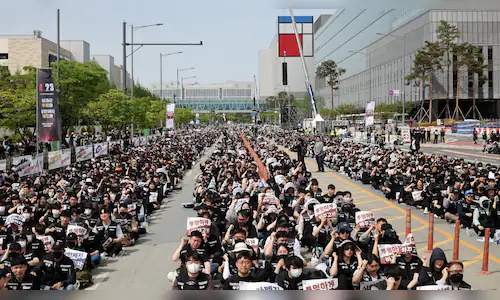
If it proceeds as planned, it could become the largest work stoppage in semiconductor industry history. Roughly 48,000 workers are expected to walk off production lines for 18 days, Reuters reported.
The dispute centres on disagreements over performance bonuses. Samsung reported a nearly 50-fold jump in chip income in the first quarter of 2026, but workers say they received no performance-linked bonuses.
The strike carries broader implications for the global artificial intelligence supply chain. Samsung is one of only three companies in the world manufacturing high-bandwidth memory (HBM) chips, which power AI data centres used by major technology firms.
Its South Korean semiconductor facilities in Giheung, Hwaseong and Pyeongtaek are considered among the most critical production hubs in the AI hardware ecosystem. A one-day strike in April reportedly caused foundry output to drop 58% and memory fabrication output to fall 18% during a single shift.
The labour unrest also comes as Samsung faces mounting competition from rival chipmaker SK Hynix. SK Hynix settled wage negotiations with its union last year and is reportedly paying workers bonuses ranging from $460,000 to $477,000 this year, with payouts potentially rising further next year. Reports also suggest around 200 Samsung engineers have moved to SK Hynix in the past four months.
Analysts warn the financial impact could be severe if the strike continues. Estimates range from losses of $700 million per day to as much as $20 billion overall. JPMorgan has estimated the disruption could cut Samsung’s operating profit by 2 trillion to 3.5 trillion won, with deeper damage possible if the strike drags on.
Samsung’s entire 2026 production run of next-generation HBM4 chips has already reportedly been sold out, raising concerns over ripple effects across the global AI sector, including companies such as Meta, Google and Microsoft that are rapidly expanding AI infrastructure.
Also Read: China’s BYD deploys its own car carrier fleet to bypass tariffs and sustain EV exports
(Edited by : Tenzin Norzom)
First Published: May 20, 2026 8:49 AM IST