Snuff Video Attempts to Traumatize Public and Demean Authorities
By Onibiyo Segun and Mary Kiara
(Oyo State) – Armed terrorists raided three schools in southwestern Nigeria on Friday, abducting 39 pupils and 7 teachers, and sparking street protests as the government’s failure to contain violence reaches a new region.
The attackers struck around 9:30 a.m. in Oriire County, about 50 miles north of Ibadan, arriving on eight motorcycles and hitting three schools in rapid succession: Baptist Nursery and Primary School, Yawota; Community Grammar School, Ahorro-Esinele; and L.A. Primary School.
Joel Adesiyan, an assistant headmaster, was shot dead while trying to escape through a classroom window. A commercial motorcyclist who unknowingly entered the area was also killed.
Community leaders said 39 pupils– children as young as two years old and seven teachers were abducted, including Principal Rachael Alamu.
“They came in large numbers on motorcycles and started shooting immediately,” one resident told TruthNigeria. “They moved from one school to another within minutes.”
Execution Video Escalates Fear
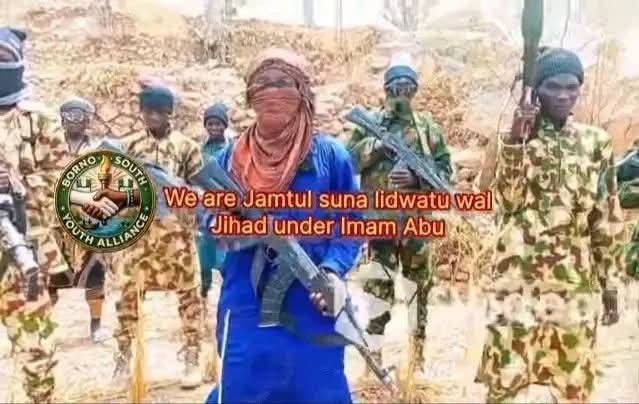
Days later, terrorists released a weaponized video showing depicting beheading of abducted teacher, Michael Oyedokun.
The footage, later removed from several platforms, showed the teacher tied and forced to speak before he was killed.
Public executions have rarely accompanied school kidnappings in Nigeria, where hostages are typically held for ransom.
The killing triggered protests in Ogbomoso, where angry teachers blocked roads and demanded government action.
“If they can behead a teacher in broad daylight, we are not safe anywhere,” one protester told TruthNigeria.
The Oyo State government ordered schools closed in four counties, but for parents whose
children remain missing, the order came too late.Residents said the killing intensified fear among families already struggling to secure the release of the abducted children and teachers.
Social media videos circulated May 17 showed the principal, Mrs. Rachael Alamu, alongside another abducted teacher, appealing for help.
Chairman Michael Olagoke described the abductions as “a direct assault on innocent lives and our faith.”
Recent entries in the TruthNigeria Terror Tracker show rising kidnapping and armed attacks along forest corridors linking Kwara, Niger, and Oyo states.
Security analysts said the attacks reflect a broader shift in kidnapping and terrorist operations moving southward from North-Central and North-West Nigeria into forested parts of the South-West.
Colonel Ibrahim Adebayo (retired), a defense analyst based in Ondo State, told TruthNigeria:
“Criminal-terror gangs and extremist factions increasingly overlap in some regions.”
“Boko Haram extremists have clearly said time and time again that they are waging a jihad interpretation of Islam,” says John Samuel*, Open Doors’ legal expert for sub-Saharan Africa. “Some of the people at the top of this list, then, are Christians who are clear targets because of their faith,” according to Open Doors. However, the religious affiliation of teacher Michael Oyedokun is unknown.
“Armed Fulani terror groups now combine banditry, territorial control, ideological influence, and intimidation of farming communities”, Adebayo explained.
Adebayo suggests that “security agencies must treat these networks as evolving insurgent threats.”
Adebayo cautioned that evidence linking specific attackers in Oyo directly to ISWAP or ISIS has not been publicly released, but the Nigerian and international security officials have warned about jihadist influence spreading through loosely connected criminal networks.
Major General Musa Danjuma (retired), based in Minna, criticized poor coordination among security agencies during the failed rescue attempt
The Pattern: Northern Tactics, Southern Soil
Security analysts say the operation mirrored tactics long associated with Boko Haram and allied groups in northern Nigeria: motorcycle mobility, simultaneous school targets, forest escape routes, and delayed security response.
Since Boko Haram abducted 276 schoolgirls from Chibok in 2014, at least 1,799 students have been seized in major attacks across northern states.
“The police station is far from our community,” Oba Tajudeen Abioye, the traditional ruler of Esinele community, told TruthNigeria. “It took them about two hours before they arrived.”
That delay allowed the attackers to disappear into forests bordering Old Oyo National Park, a corridor security officials have increasingly identified as vulnerable to militant infiltration.
The attack followed earlier warnings.
In January 2026, five National Park Service officers were killed in an assault on the Oyo National Park office, also located in Oriire County. Governor Seyi Makinde acknowledged at the time that the attack appeared “cross-border in nature,” but residents say visible security reinforcement never followed.
“The military is dangerously overstretched,” security analyst David Shuaibu told TruthNigeria in an earlier interview. “Security forces have been reduced to reacting after attacks rather than preventing them.”
Parents Watch the War Move South
For families in Yawota and nearby villages, the attack unfolded in daylight.
“There were many children inside the vehicle alongside the gunmen,” Sarah Oguntunde, whose 13-year-old daughter Hanah Ojo remains missing, told TruthNigeria.
“Since then, we have not heard anything about my daughter,” she said.
Teacher Elizabeth Olagoke said some attackers wore military-style camouflage and spoke Yoruba, Hausa, and Pidgin English during the raid.
“I had about 20 children in my class,” Olagoke told TruthNigeria. “Many of the abducted children came from Yawota, Esinele, and Alausa communities.”
During an attempted rescue near forest routes around Igbeti, the Fulani terrorists opened fire on security personnel and local hunters assisting the operation, killing one responder and injuring several others, according to eyewitnesses.
One abductee receiving treatment at Ladoke Akintola University of Technology (LAUTECH) Teaching Hospital in Ogbomoso, identified as Adewale Sunday, described the ambush to TruthNigeria reporter in a telephone chat.
“The Fulani terrorists fired rapidly at the rescuers, but most of the security personnel were relying on traditional charms and rituals, locally known as juju, believed to protect them from bullets,” Sunday said.
“When the attackers realized this protection was only partially effective, they turned to improvised explosive devices (IEDs), which caught us off guard.” Sunday explained.
Sunday further added that, “the hunters familiar with the terrain advised we disembark from our motorcycles, but the soldiers ignored them. That probably alerted the Fulani terrorists, and they attacked immediately”.
Government Response
The Oyo State Police Command confirmed the attack and said tactical teams had been deployed.
But critics say the response again focused on reaction rather than prevention.
Olamijuwonlo Alao Akala, a lawmaker representing the affected area, called for a permanent military base. “This inhumane criminal act is a direct assault on our educational system,” Akala said during a visit to the community.
The request itself underscored the limited security presence in an area now facing attacks once associated almost exclusively with Nigeria’s north.
The Southwest as Next Front
Hours after the Oyo raid, Boko Haram fighters abducted about 40 students from a school in Borno State.
The near-simultaneous attacks reinforced fears that Nigeria’s school kidnapping epidemic is no longer regionally contained.
On Sunday, a video emerged showing Principal Rachael Alamu pleading for help from captivity.
“I am making this video to ask for help from everyone,” Alamu said in the recording. “Please come to our aid so that our lives will not be lost.”
Taiwo-Hassan Adebayo, Chairman of the Oyo Global Forum, told TruthNigeria, “this must not be treated as an isolated incident; it is a clear national security threat requiring sustained military, intelligence, and community-based security operations.”
Eight years after Chibok, analysts say the school kidnapping war no longer belongs only to the north. It has now crossed into the southwest.
Onibiyo Segun and Mary Kiara report on terrorism for TruthNigeria.