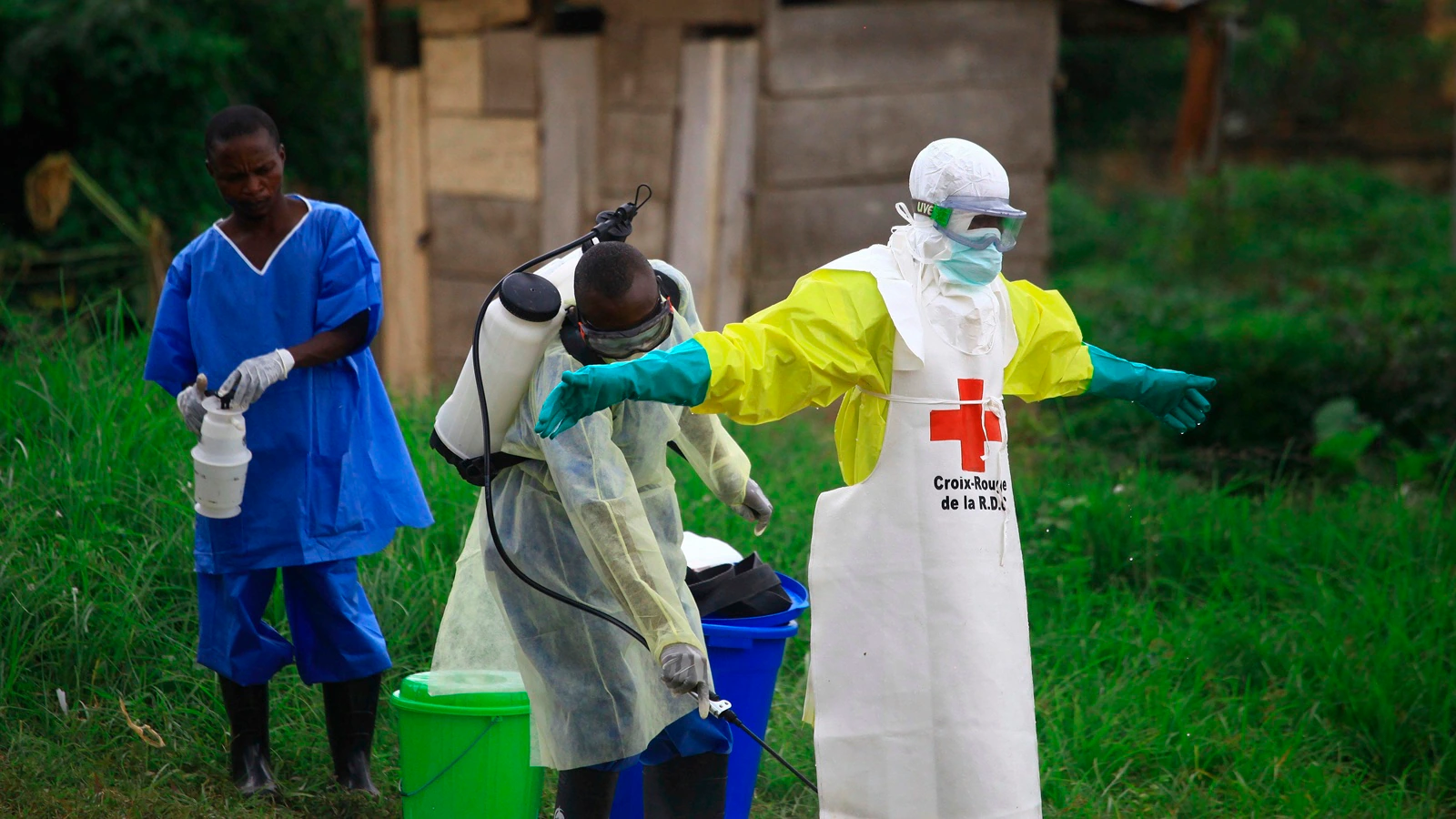
An epidemic of Ebola disease caused by the Bundibugyo virus broke out across these two countries, triggering a public health emergency of international concern on May 17.
Jean-Jacques Muyembe, director of Congo’s National Institute for Biomedical Research, told Reuters that Butembo, a city home to hundreds of thousands of people in North Kivu province, has recorded its first two confirmed cases of the disease on Monday.
According to Associated Press, Congo’s health minister, Samuel Roger Kamba, said investigations were underway to determine whether the deaths and 513 suspected cases were actually linked to the disease.
What is Ebola disease?
According to the WHO, Ebola disease is a rare but extremely serious illness in humans, often fatal. It is caused by viruses belonging to the Orthoebola virus genus within the filoviridae family.
Scientists have identified six species of Orthoebola viruses so far, with three of them known to trigger large outbreaks. They are-
- Ebola virus (EBOV), which causes Ebola virus disease (EVD)
- Sudan virus (SUDV) causes Sudan virus disease (SVD)
- Bundibugyo virus (BDBV), which causes Bundibugyo virus disease (BVD)
History
The first recorded Ebola outbreaks occurred in 1976. One emerged in Nzara, in present-day South Sudan, where the Sudan virus disease was identified. The other was reported in Yambuku, in present-day Democratic Republic of the Congo, and was caused by the Ebola virus. Between 2014 and 2016, the region witnessed the largest Ebola outbreak in history, severely affecting parts of Central and West Africa.
Story continues below this ad
How is the virus spread?
Fruit bats from the Pteropodidae family are believed to be the natural hosts of the Orthoebola virus. According to the WHO, the virus can enter the human population when people come into close contact with the blood, bodily fluids or organs of infected animals such as fruit bats, chimpanzees, gorillas, monkeys, forest antelope or porcupines found sick or dead in the rainforest.
It is also said the virus can spread from one person to another through direct contact with the blood or bodily fluids of someone who is sick with or has died from Ebola disease. Also spread through contact with objects or surfaces contaminated with bodily fluids such as blood, faeces, or vomit from an infected or deceased person.
Also, if any person comes in contact with a dead body can also be infected with the Ebola disease.
Possible symptoms
From the start of the symptoms, it varies from two to 21 days.
Story continues below this ad
Detected symptoms can go from as basic as fever, fatigue, malaise, muscle pain, headache and sore throat, which are further followed by vomiting, diarrhoea, abdominal pain, rash and can show symptoms of impaired kidney and liver functions as noted by the organisation.
Some patients may even develop both internal and external bleeding, which can include blood in vomit and stools, as well as bleeding from the nose, gums and vagina. Bleeding at the sites where needles have been inserted into the skin may also occur in some cases. Hence, people must look out for such occurrences.
In the central nervous system, it can result in confusion, irritability and aggression.
The prevention criteria
According to the WHO, community engagement plays a central role in bringing any Ebola outbreak under control. Managing an outbreak requires a combination of approaches, including proper clinical care, surveillance and contact tracing, along with laboratory services and strict infection prevention measures in health facilities. Safe and dignified burials, vaccination where applicable and active community outreach are also essential parts of an effective response.
Story continues below this ad
Any cure currently?
The two vaccines currently approved for Ebola offer protection only against the Zaire strain. Ervebo, developed by Merck & Co. and given as a single dose, is the recommended vaccine for use during outbreaks and is currently the only one available in the global stockpile.
The second vaccine, Zabdeno and Mvabea, developed by Janssen Pharmaceutica, requires two doses administered over a period of time.
(Written by Paramita Datta, who is an intern with The Indian Express)