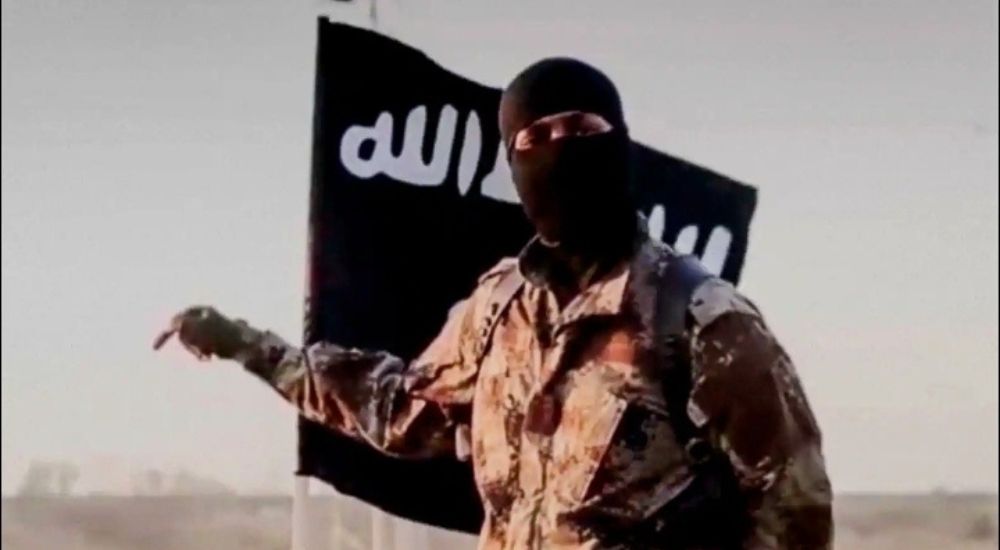
A Nigerian-born jihadist who rose from the insurgent heartland of Borno State to become the second-most senior figure in the Islamic State globally was killed in a joint military operation by American and Nigerian forces, United States President Donald Trump announced on Friday.
Trump declared that Abu Bilal al-Minuki, identified as ISIS’s second-in-command worldwide, had been eliminated in a mission conducted together by American forces and the Armed Forces of Nigeria.
In a post on Truth Social, Trump said: “Tonight, at my direction, brave American forces and the Armed Forces of Nigeria flawlessly executed a meticulously planned and very complex mission to eliminate the most active terrorist in the world from the battlefield.
Abu-Bilal al-Minuki, second in command of ISIS globally, thought he could hide in Africa, but little did he know we had sources who kept us informed on what he was doing.”
Trump praised the success of the mission and claimed that al-Minuki’s removal would significantly weaken ISIS operations across different regions, adding: “He will no longer terrorize the people of Africa, or help plan operations to target Americans.
“With his removal, ISIS’s global operation is greatly diminished. Thank you to the Government of Nigeria for your partnership on this operation. GOD BLESS AMERICA!”
The announcement marks a significant moment in the ongoing global campaign against the Islamic State and in the deepening security partnership between US and Nigeria, relationship that has evolved rapidly over the past year amid heightened American military engagement across northern Nigeria.
From Borno to the top of a global terror network
Born in 1982 in Mainok, located in Nigeria’s Borno State, al-Minuki rose through the ranks of extremist networks operating in the Lake Chad Basin and Sahel region.
He became associated with the Islamic State West Africa Province, a Boko Haram splinter faction aligned with ISIS. Over time, he developed into a key operational and financial figure within ISIS’s expanding African network, particularly in regions plagued by insurgency and weak state control.
Mainok, a small town in Borno’s Kaga Local Government Area, sits within territory long contested between Nigerian forces and jihadist groups.
That the man who would eventually ascend to the global deputy leadership of ISIS emerged from that environment is, analysts say, emblematic of how decades of neglect, poverty, and violent extremism in the Lake Chad region have fed the international jihadist pipeline.
Since ISWAP leader Mamman Nur was executed in 2018, al-Minuki had held a regional commander position within ISIS. Within this regional faction, he managed operations for the strategic Lake Chad division of ISIS’s General Directorate of Provinces, a body overseeing the group’s international branches.
His relationship with Boko Haram’s former leader, Abubakar Shekau, was characterised by deep hostility.
At some point between March 2015 and early 2016, Shekau declined an ISIS request to send fighters to Libya. Instead, al-Minuki who was serving as ISWAP’s Lake Chad area commander dispatched fighters himself.
His actions further deteriorated relations with Shekau, as the Boko Haram leader resented those seeking a closer working relationship with ISIS.
The episode illustrated not only al-Minuki’s ideological alignment with ISIS’s global vision, but also his willingness to act independently of and in defiance of rival militant authority.
Security reports and counterterrorism assessments identified al-Minuki as a senior official linked to ISIS’s General Directorate of Provinces. He was also associated with the al-Furqan Office, believed to be one of ISIS’s major regional operational and financial coordination networks in Africa.
According to analysts, his responsibilities included overseeing logistics, coordinating militant operations, and supporting ISIS-linked activities across multiple countries.
According to the Counter Extremism Project, al-Minuki mainly operated in the Sahel region of Africa, a vast semi-arid zone stretching nearly 5,900 kilometres across the continent from the Atlantic Ocean to the Red Sea
_American designation and prior claims of his death
In 2023, the United States formally designated al-Minuki a Specially Designated Global Terrorist due to his leading role in ISIS-West Africa. For al-Minuki, this label effectively blocked any assets he may have held under U.S. jurisdiction and prohibited American citizens or financial institutions from engaging in any transactions with him.
There had been earlier reports from Nigerian military sources in early 2024 claiming that al-Minuki had been killed during counterterror operations.
However, Trump’s latest announcement appears to indicate that U.S. and Nigerian intelligence agencies later confirmed his identity and role through a separate high-profile operation in 2026. The discrepancy underscores the difficulty intelligence agencies routinely face in verifying the deaths of senior militant commanders operating in remote or contested terrain.
His full name appears across records as Abu Bakr ibn Muhammad ibn Ali al-Mainuki, with multiple spelling variants in circulation across counterterrorism databases — a reflection of the transliteration challenges common to Arabic names and the deliberate effort by senior militants to obscure their identities.
A deepening US-Nigeria security partnership
Friday’s announcement did not occur in a vacuum. It is the product of a dramatically expanded American security footprint in Nigeria over the past several months — one that has itself generated significant political complexity on both sides of the relationship.
On 25 December 2025, the U.S. Navy conducted missile strikes against Islamic State targets in Sokoto State using Tomahawk missiles launched from the USS Paul Ignatius.
President Trump ordered the strikes following a series of mass kidnappings and attacks on religious communities, describing the violence as an existential threat to Christians in Nigeria.