A farmer’s quest for justice over alleged herder attacks on his farms took a dramatic turn when he and journalists were thrown out of a courtroom, raising questions about openness in Akwa Ibom’s judiciary.
Questions about arbitrariness and secrecy in Akwa Ibom’s justice system emerged after a complainant was thrown out of a courtroom and journalists were prevented from covering a matter of public interest in a criminal case stemming from alleged destruction of farmland by cattle.
At least three journalists told PREMIUM TIMES they were denied access to Magistrate Court 7 in Uyo while attempting to cover proceedings in the case of Commissioner of Police v. Abdullahi Yusuf, a prosecution arising from allegations that cattle repeatedly invaded farms owned by investigative journalist and farmer Ibanga Isine.
Mr Isine, who petitioned the police after a series of alleged farm invasions was himself ordered out of the courtroom by the presiding magistrate, Godwin Edemekong, according to accounts he and two journalists gave to this newspaper.
The magistrate or the court had not publicly commented on the incident as of Friday.
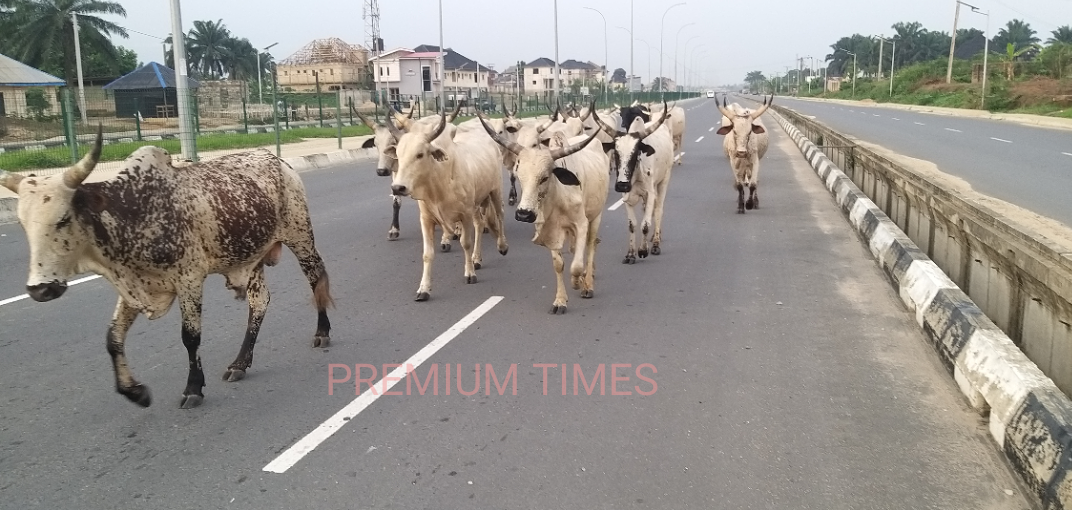
Destruction of farmlands by herders and their cattle remains an unresolved issue in Akwa Ibom despite the fact that the state, like several others in Nigeria, had outlawed open grazing of cattle since 2021.
For months, Mr Isine has been pursuing redress over what he describes as repeated incursions by herders into commercial farms operated by him and his partners in Uyo.
The farms, located along Airport Road and within Shelter Afrique Estate, produce vegetables and staple crops on a commercial scale. According to Mr Isine, cattle destroyed cucumber and okra fields, damaged irrigation facilities and forced workers to flee during some of the invasions.
The matter eventually led to the arrest and arraignment of a herder Mr Yusuf.
“Each time I sought information from the prosecutor, he explained that he was busy. It was only after considerable pressure that he reluctantly informed me that the matter had been scheduled for hearing on Thursday, 18 June 2026, and insisted that I must be present in court. Curiously, the particulars of the case were not disclosed to me until barely an hour before the planned commencement of the hearing,” Mr Isine posted on his Facebook page.
What happened in court on Thursday, however, shifted attention from the underlying dispute to the conduct of the proceedings.
A journalist with XL106.9FM, Emediong Silva arrived at the court complex before proceedings began.
At first, he said, there appeared to be no problem. That changed when he mentioned the particular case he had come to monitor.
“The clerk told me I needed a permit from my station before I could enter the court,” Mr Silva said. “I called my office and they spoke with him. After that, the issue was no longer a permit. It became questions about the case.”
According to him, he was moved from one official to another and repeatedly asked to wait. Eventually, he said, court officials told him journalists were not allowed inside. He found the explanation unusual.
“Court proceedings are generally open. I have covered courts before and never encountered that.
“Later on, the police in court called me, dragged me outside and bounced the door behind me. They treated me like I stole something. Even Mr Isine was dragged too. The magistrate shouted, ‘Get out of my court. Take him out of my court’. This was done without giving any justification.”
A journalist with Inspiration FM, Jonathan Essien recounted a similar experience.
The moment he mentioned the herder’s case, he said, he was asked to leave. “I remained outside and watched what happened,” he told PREMIUM TIMES. “I saw police officers pushing the XL FM reporter out. I also saw Mr Isine being removed from the courtroom.”
“I think why they did what they did was because of the case in question. I saw three herders in court and they were not pursued,” he said.
A reporter, Idongesit Akan who works with the state-owned newspaper, Pioneer Newspaper, confirmed she went to the court premises but said she was informed the matter would not be heard in Court 7 and left afterwards.
By the time Mr Isine entered the courtroom, some journalists had already been turned away. He said the proceedings that took him to court had not begun when a court official approached the bench and spoke briefly with the magistrate.
Moments later, he said, the magistrate ordered a journalist out. Then his attention shifted to Mr Isine.
“He asked who I was,” Mr Isine recalled. “I stood up and said I was the complainant. Before I could finish explaining why I was there, he told me to get out.”
Mr Isine said he reminded the court that the police prosecutor had specifically instructed him to attend.
It made no difference, he said. Three police officers escorted him from the courtroom. The case in which he was listed as the complainant had not yet been called.
When contacted by PREMIUM TIMES, the police prosecutor, Blessing Essien acknowledged that he asked Mr Isine to attend court that morning.
He said he was called by his superior to attend to urgent matter at his office and that delayed him and prevented him from appearing when proceedings commenced.
Before leaving for the office assignment, he said, he filed an application asking the court to stand down the matter.
“I never knew that the call my boss made would extend longer. So, before I left, I signed a stand-down paper, believing I would make it by the time.”
Mr Essien told this newspaper that he later sought an explanation from court officials on what happened.