India delivered a scathing rebuke of Pakistan at the United Nations Security Council on Monday, condemning Islamabad’s military airstrikes on Afghan territory as flagrant violations of international law while simultaneously showcasing its expansive humanitarian footprint across Afghanistan.
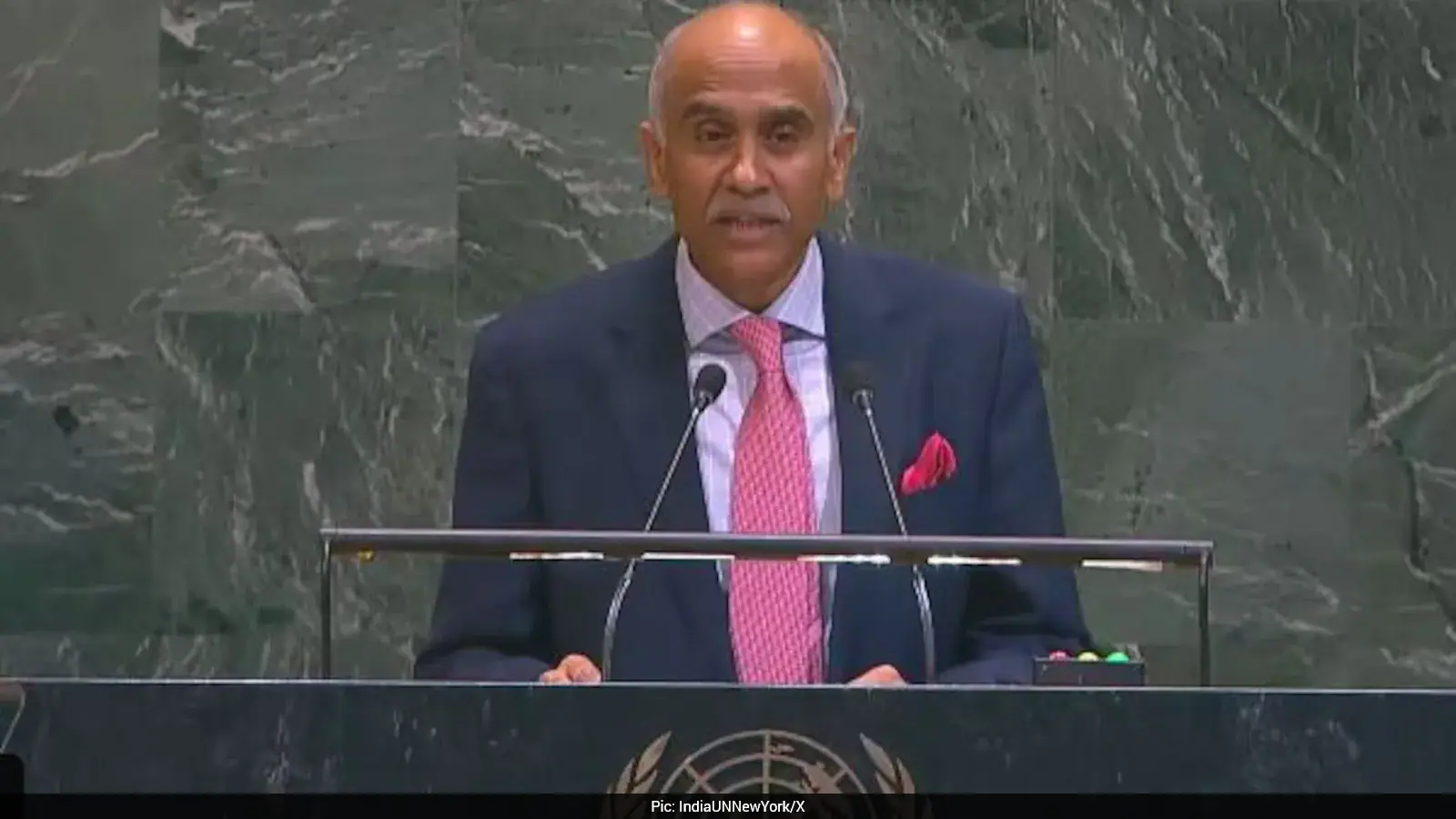
Speaking at a UNSC meeting on the situation in Afghanistan, India’s Permanent Representative Ambassador Harish Parvathaneni pulled no punches, accusing Pakistan of killing civilians during the holy month of Ramadan and labelling the country’s behaviour as the “perfect example of hypocrisy.”
“Dressing up a massacre as a military operation does not absolve the perpetrator,” Ambassador Parvathaneni declared, adding that “killing, maiming and orphaning civilians is not counter terrorism.”
The remarks were directed squarely at Pakistan following its cross-border military operations inside Afghan territory. Citing UNAMA figures, India noted that 372 civilians were killed and 397 injured in just the first three months of 2026 — a significant number of casualties occurring during Ramadan. India called for full compliance with international humanitarian law, including the principles of precaution, distinction, and proportionality, and backed UNAMA’s demand for independent investigations to ensure accountability.
India also condemned what it described as Pakistan’s deliberate obstruction of Afghan trade, calling it “trade and transit terrorism.” Afghanistan, a landlocked country, has been denied land passage through Pakistan for its exports — a move India said violates WTO norms, UN declarations on Landlocked Developing Countries, and the UN Charter itself. India has responded by offering tariff-free market access for Afghan goods and operationalising a dedicated air freight corridor between the two countries. According to the World Bank, India already accounts for 43 percent of Afghanistan’s total exports.
On the humanitarian front, Ambassador Parvathaneni outlined India’s sweeping aid programme, which spans all 34 provinces of Afghanistan and encompasses more than 500 development projects focused on healthcare, infrastructure, and education. Since August 2021, India has supplied over 50,000 tonnes of wheat, 420 tonnes of medicines and vaccines, and 40,000 litres of pesticides. In April 2026 alone, India dispatched three tonnes of specialised flood relief supplies and 33 tonnes of BCG and Tetanus & Diphtheria vaccines.
India also highlighted healthcare initiatives including maternity clinics in Paktika, Khost, and Paktia, upgrades to the Indira Gandhi Institute of Child Health in Kabul, and the upcoming construction of an oncology centre, a trauma centre, and a 30-bed hospital. Afghan children suffering from congenital heart diseases are now receiving treatment in India, the Ambassador noted.
In a softer diplomatic note, India announced it is hosting the Afghanistan Cricket Team for a bilateral series, calling sport “a rare power to lift a nation’s spirit.” The announcement came on the heels of Afghan cricketers’ celebrated performances in the Indian Premier League.
India did not spare Pakistan on the political front either. Ambassador Parvathaneni accused Islamabad of running “an organised factory of hate,” pointing to official Pakistani government directives labelling groups inside its own borders as “Fitna al Hindustan” — a term he dismissed as state-sponsored disinformation designed to sustain domestic hostility toward India and distract from Pakistan’s own political and economic failures. He described Pakistan’s 27th Constitutional Amendment as a de facto military coup.
India reaffirmed full support for UNAMA’s mandate and called on the international community to move beyond a punishment-only approach toward Afghanistan, urging policy instruments that benefit ordinary Afghans rather than deepen their isolation.