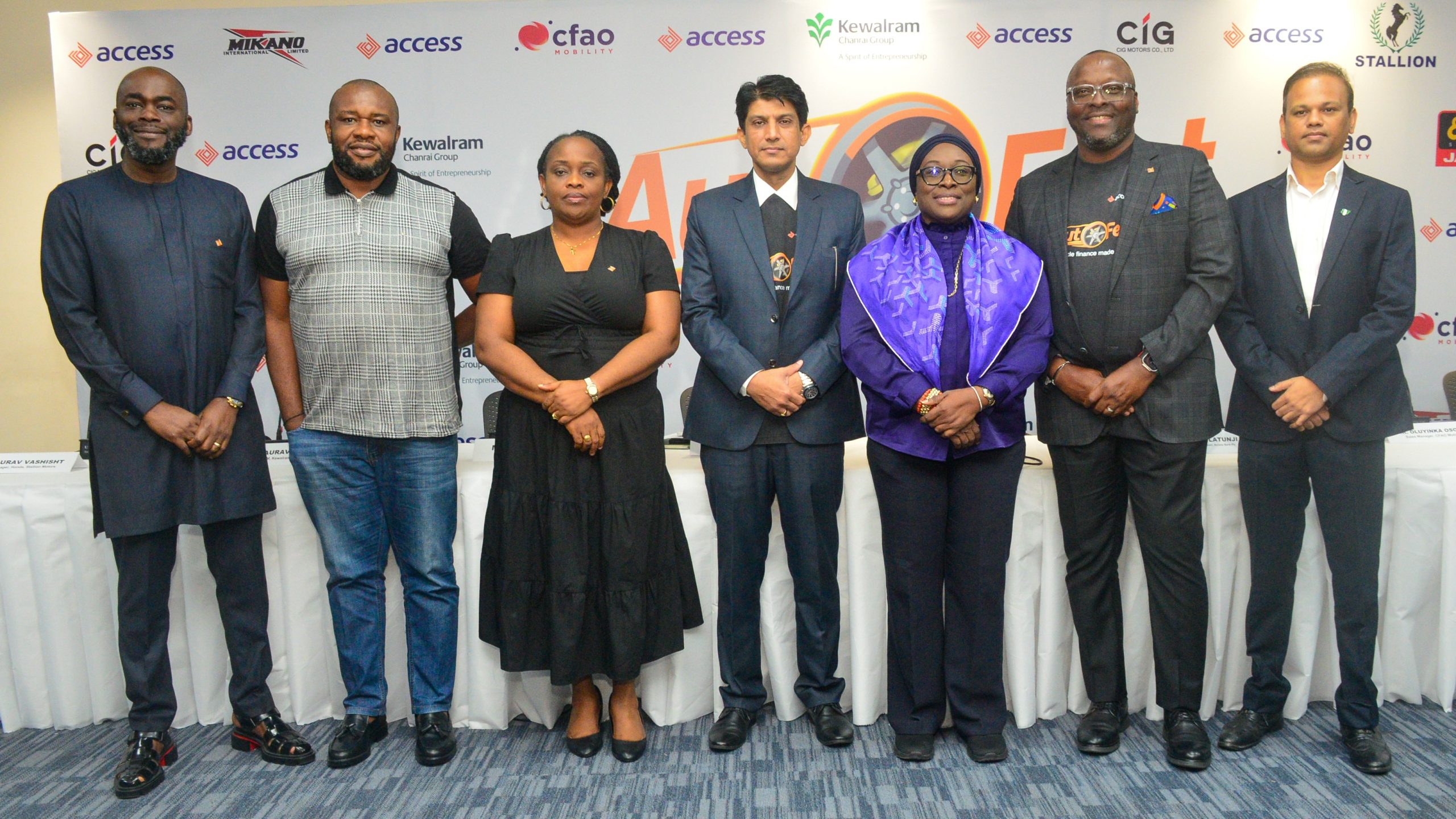
In a bold move set to redefine automobile ownership in Nigeria, Access Bank has launched a groundbreaking vehicle financing initiative that allows Nigerians to acquire cars with as little as a 10 per cent deposit, while the bank covers up to 90 per cent of the vehicle’s value.
The initiative, unveiled at AutoFest in Lagos, is designed to dismantle long-standing financial barriers that have kept vehicle ownership out of reach for many Nigerians amid rising costs and economic pressures.
Speaking at the launch, Executive Director of Corporate and Investment Banking, Iyabo Soji-Okusanya, described the programme as a transformative solution tailored to bridge affordability gaps in Nigeria’s automotive market. She emphasized the simplicity and efficiency of the process, noting that applicants can complete the entire financing journey digitally and drive away with their vehicles in record time.
“You apply online, and you go home with the keys to your car already in your pocket,” she stated, highlighting the bank’s commitment to seamless customer experience.
The platform brings together major automotive players including CIG Motors, Mikano Motors, Kewalram Motors, Stallion Motors, Elizade JAC, CFAO, alongside other mobility dealers and financing partners. This integrated ecosystem enables customers to purchase both brand-new and certified pre-owned vehicles through a single, streamlined process.
For businesses, the initiative offers a strategic advantage—unlocking access to operational vehicles while helping dealers reduce inventory backlog and improve liquidity tied to unsold stock.
Group Head, Access Bank Mobility, Ishmael Nwokocha, revealed that the bank spent six months engaging stakeholders across the automotive value chain to develop the scheme.
He noted that Nigeria records approximately 100,000 vehicle sales annually, with only about 10 per cent being new cars, while the overwhelming majority—90 per cent—are pre-owned. According to him, escalating vehicle prices have significantly eroded purchasing power, making financing solutions more critical than ever.
“What we are offering is simple—bring 10 per cent equity, and we finance the remaining 90 per cent,” Nwokocha explained.
Beyond financing, customers will benefit from bundled services including insurance, after-sales support, and a digital tracking system that allows all parties—buyers, dealers, and the bank—to monitor the application process in real time.
The initiative is not limited to personal vehicle ownership. It extends to corporate organizations, SMEs, schools, hospitals, and fleet operators. Notably, Access Bank also plans to onboard players in the ride-hailing and informal transport sectors—segments traditionally excluded from structured financing systems.
Addressing concerns around loan repayment, Group Head, Product and Segment, Chizoba Iheme, assured that the bank has built flexibility into the scheme. Customers facing financial difficulties can apply for loan restructuring instead of risking immediate repossession.
“As long as the vehicle remains functional and in use, we can review and repackage the loan,” she explained.
She also clarified that borrowers are not obligated to maintain loans for the full tenure, as early repayment options are available without penalties.
Managing Director of CIG Motors, Eniola Olutimilehin, described the partnership as a significant boost for both consumers and the automotive industry. She noted that improved access to financing will not only empower individuals but also support entrepreneurs who rely on vehicles for business operations.
Ultimately, the initiative forms part of Access Bank’s broader vehicle asset financing strategy aimed at deepening mobility access and stimulating economic activity across Nigeria.
With flexible terms, digital accessibility, and strong industry partnerships, the programme signals a major shift in how Nigerians can own and utilize vehicles—turning what was once a luxury into a more attainable asset.