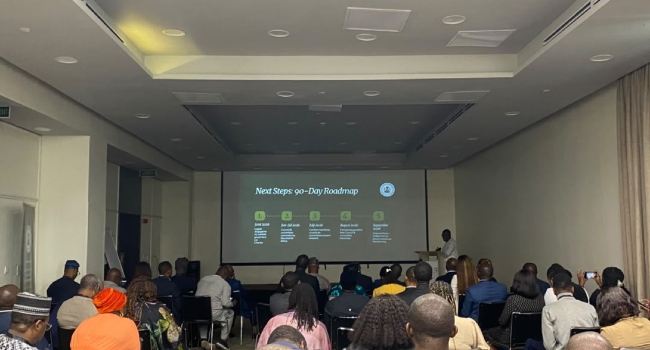
The Federal Government has explained the modalities for the proposed Ministerial Advisory Council for Cybersecurity Coordination.
At the second stakeholder session on the proposed council in Lagos on Wednesday, the Senior Special Adviser to the Minister of Communications, Innovation and Digital Economy, Kasim Sodangi, said the council will provide expert advice to the government on cybersecurity matters.
It will also contribute to the development of an effective regulatory framework for the sector.
“There are also going to be members who will be nominated through the process we have established so that we have a broad range of expertise in the room. We will have representation, expertise, and the right government agencies,” he said.
Sodangi noted that members of the private sector will dominate the council, rather than government representatives.
“The minister is particularly interested in ensuring that the council is weighted more heavily toward the private sector. He does not want this to become another mechanism through which the government is over-represented.
“The goal of this is twofold. First, it is to provide advice to the government, including the Federal Executive Council and the president, on the changing cybersecurity landscape and the measures that need to be taken,” he said.
The ministry said the next phase of the initiative will focus on selecting council members and developing its operational framework between June and July 2026.
It plans to inaugurate and operationalise the council in September 2026.
READ ALSO: Lagos Govt Unveils Cybersecurity Guidelines As Nigeria Loses Over $500m To Cybercrime Annually
In his address at the event, the Minister of Communications, Innovation and Digital Economy, Bosun Tijani, represented by the National Commissioner of the Nigeria Data Protection Commission (NDPC), Vincent Olatunji, said the outcomes of the second stakeholder session would be implemented.
According to him, cybersecurity is significant to both Nigeria’s economy and the global economy.
“What we are discussing here today is very significant to our economy and to the global economy. Because every facet of life is driven by digital technology now. We are talking of hardware; we are talking of software, even the service sector emanating from the deployment of digital technologies,” he said.
“All the decisions taken here today will be implemented, but it won’t be the ministry alone that will implement; we all have roles to play.”
Stakeholders at the session emphasised the importance of collaboration between government and industry players in addressing emerging cyber threats and securing digital transactions.
They demanded an urgent strengthening of Nigeria’s cyber resilience, enhanced coordination among key stakeholders, and advanced efforts toward a safer and more secure digital economy.