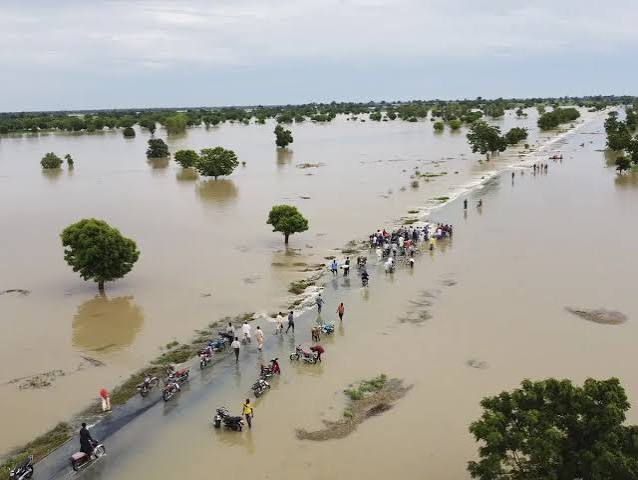
(Lagos flooding. Photo by Vanguard News)
Residents of Ajah, Mafoluku, and other flood-prone communities in Lagos have recounted harrowing experiences following Thursday’s torrential rainfall, which submerged homes, cut off major roads, and left many stranded for hours.
Speaking on Friday, residents called for urgent government intervention to address the recurring flooding, which they attributed to poor drainage infrastructure.
Along Muri Okunola Road in Ajah, Mrs Rukayat said floodwaters submerged approximately 200 metres of the road, forcing commuters to wade through waist-deep water.
Many motorists turned back, while others abandoned their vehicles and continued on foot. Some youths took advantage of the situation by assisting stranded tricycle operators and helping people cross flooded sections for a fee.
“The water level was almost up to my lap. People literally had to wade through it to get home,” she said.
Rukayat attributed the flooding to poor drainage and a possible blockage in a major canal serving the area, noting that overgrown vegetation and sand deposits may have reduced its capacity to discharge stormwater.
She added that residents had repeatedly alerted authorities to the problem, but little had changed.
In Mafoluku, several streets, homes, and access roads were similarly submerged. Mrs Iriagbonse Okunkpolor of Agboola Street said what began as a short trip to buy household items turned into an hours-long ordeal after the rain started suddenly and flooded the entire street, leaving her with no safe route home.
Mr Mukaila Idris described the floodwaters as dangerously strong, recounting how some residents paid young men to carry them across for fear of being swept away.
Another resident, Mr Williams Ekpo of the Eyinogun area, said the flood extended beyond the roads and entered residential compounds, damaging household items.
“This happens almost every rainy season, yet nothing seems to be done to address the drainage problem,” he said.
Residents urged relevant authorities to investigate the persistent flooding and improve drainage infrastructure ahead of the remainder of the rainy season.