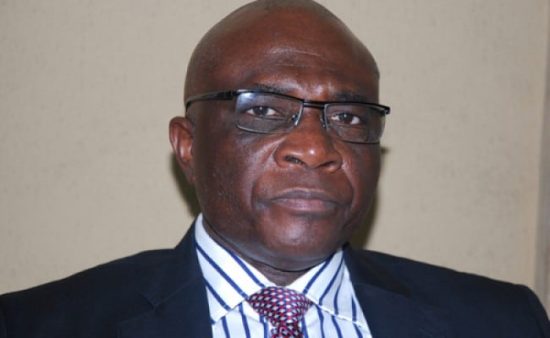
The Special Adviser to President Bola Tinubu on Information and Strategy, Bayo Onanuga, has accused sections of the Nigerian media of creating a false impression that insecurity has overwhelmed the country.
Onanuga made the remarks on Tuesday during an interview on Arise Television, where he argued that security challenges in parts of Nigeria should not be interpreted as evidence that the country is under siege.
“The problem is that the media in Nigeria, they’re even creating the problem. The way they’re reporting security is as if the entire country is consumed,” he said.
According to him, many Nigerians still travel safely across different parts of the country despite incidents of kidnapping and attacks.
“Don’t let people threaten you that the entire country is under siege. It’s not. There are security breaches. There are major security breaches,” Onanuga stated.
He also suggested that some of the incidents reported in the country occurred at night despite repeated warnings from security agencies against travelling after dark.
“Any time I read about either a kidnap or an attack somewhere, sometimes I look at the time.
“I say, wow, it happened 8pm, it happened 9pm, sometimes 1am. A long time ago, the police told people to stop travelling at night,” he said.
Onanuga’s comments came during a discussion on data relating to terror-related fatalities in Nigeria between 2015 and 2026.
During the programme, interviewers cited figures from Beacon Security and Intelligence Limited and the Armed Conflict Location and Event Data Project, which reportedly showed a 4.6 per cent rise in fatalities linked to groups such as ISWAP, bandits, IPOB, ESN and armed herders between 2015 and 2025.
The figures were presented in contrast to President Tinubu’s recent claim that insecurity-related fatalities had dropped by 81 per cent.
Defending the Federal Government’s position, Onanuga said the Presidency relies on data supplied by the Office of the National Security Adviser.
“You can’t be so categorical about that. The data we’re offering is the data provided by the Office of National Security Adviser. That’s the data we use,” he said.
He also questioned the basis of the alternative figures presented during the interview.
“Whoever has compiled this, where have you got it from?” he asked.
When informed that the figures came from independent organisations known internationally for conflict tracking and security analysis, Onanuga insisted that government data should not be dismissed.
“They may be wrong. The data we have is the data from the Office of National Security Adviser. You cannot say the data is wrong and only this one is right,” he said.