3 min readJun 4, 2026 04:06 PM IST
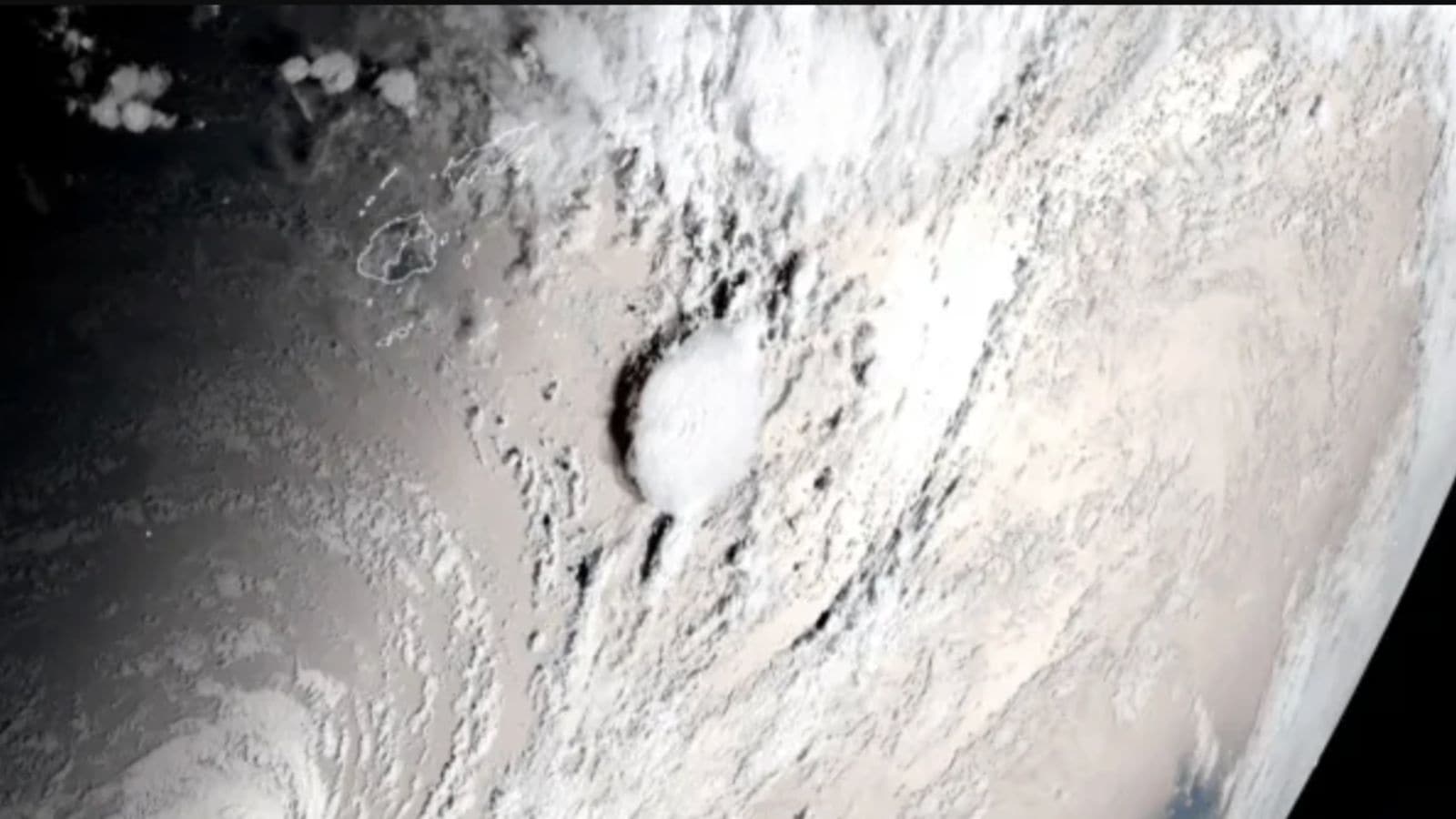
The massive eruption of the Hunga Tonga-Hunga Ha’apai underwater volcano in January 2022, located in the Tongan archipelago in the southern Pacific Ocean, may have revealed an unexpected way to tackle methane, one of the most potent greenhouse gases, according to a new study published in Nature Communications, CNN reported.
The eruption is considered one of the most powerful in modern history, blasting gas nearly 40 miles above Earth’s surface. The explosion was at least hundreds of times more powerful than the Hiroshima nuclear bomb. It triggered a tsunami and a sonic boom that circled the planet twice. But surprisingly, researchers say it also appeared to clean up some of its own pollution.
Scientists spot unusual formaldehyde cloud
The discovery emerged from satellite observations of the eruption plume. Scientists detected an unusually large cloud of formaldehyde, a compound that commonly forms when methane is broken down in the atmosphere.
“We found a huge cloud of formaldehyde that should normally not be there,” said Maarten van Herpen, study author, physicist and executive director at Acacia Impact Innovation, a Dutch consultancy.
How the methane-destroying process works
The researchers believe they observed a chemical process previously identified over the Atlantic Ocean. Earlier studies found that Saharan dust blown across the Atlantic mixes with sea salt spray to form tiny iron-based particles. When exposed to sunlight, these particles generate chlorine atoms that react with and help destroy atmospheric methane.
According to the new study, a similar process appears to have occurred following the Tonga eruption. The volcano injected vast amounts of salty water vapour into the stratosphere—enough to fill around 58,000 Olympic-sized swimming pools—along with volcanic ash. Researchers believe sunlight interacting with this mixture generated chlorine, which then helped break down methane released during the eruption.
“It has emitted methane and then destroyed these emissions through the particles in the plume,” van Herpen said.
Story continues below this ad
Scientists tracked the formaldehyde cloud for 10 days. Since formaldehyde typically survives for only a few hours in the atmosphere, its continued presence suggested that methane destruction was taking place continuously for more than a week.
The team estimates that the eruption released around 330,000 tonnes of methane, with roughly 900 tonnes being broken down each day.
Matthew Johnson, a chemistry professor at the University of Copenhagen and co-author of the study, described the findings as “new — and completely surprising”.
Why the findings matter
The discovery is significant because methane is about 80 times more effective than carbon dioxide at trapping heat over a 20-year period. It is responsible for roughly a third of current global warming, and atmospheric methane concentrations have doubled over the past two centuries.
Story continues below this ad
While cutting carbon dioxide emissions remains essential because the gas persists in the atmosphere for centuries, reducing methane is often viewed as a quicker way to slow near-term warming because it has a much shorter atmospheric lifespan.
The researchers suggest their findings could eventually help develop new strategies to remove methane emissions at their source. They also say the process could inform future geo-engineering approaches aimed at lowering global temperatures.
Stay updated with the latest – Click here to follow us on Instagram