During a presidential debate broadcast to millions of people in September 2024, Donald Trump amplified a baseless allegation that Haitian immigrants in Ohio were eating dogs and cats.
“They’re eating the dogs, the people that came in, they’re eating the cats,” he said. “They’re eating the pets of the people that live there.”
Months later, the Trump administration announced plans to strip humanitarian protections for tens of thousands of Haitian immigrants who live and work in the U.S. legally.
On Thursday, the Supreme Court’s conservative majority allowed the president to revoke those protections — and determined that there was nothing “overtly racial” about his remarks and a long list of his other derogatory smears against immigrants.
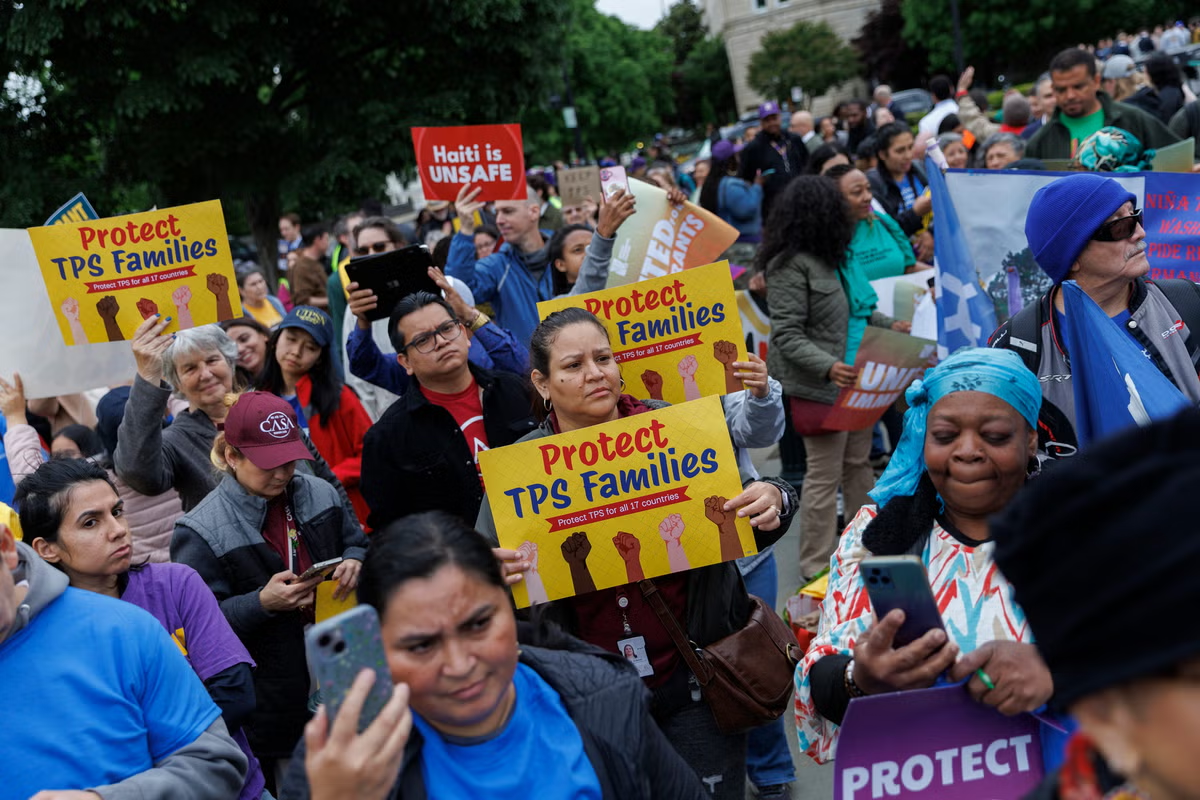
Viles Dorsainvil, who lives in the U.S. under a long-running Temporary Protected Status designation for Haitian immigrants, is in shock. “Maybe my expectations were too high because I believe in a country such as the U.S.A.,” he told reporters Thursday.
The Supreme Court appeared to accept “all the conspiracy theories from the president against minority groups” with its decision to upend the lives of roughly 350,000 Haitians and their families, Dorsainvil said.
“And now we are in a situation where we don’t know how things will be for our community,” he said. “Families have started asking us questions that we are not able to answer. It is the saddest day of my life.”
Dorsainvil, a pastor in Springfield, Ohio, was among the plaintiffs in several legal challenges to the Trump administration’s threats to rescind TPS designations for Haiti and Syria, two nations rocked by instability and humanitarian crises.
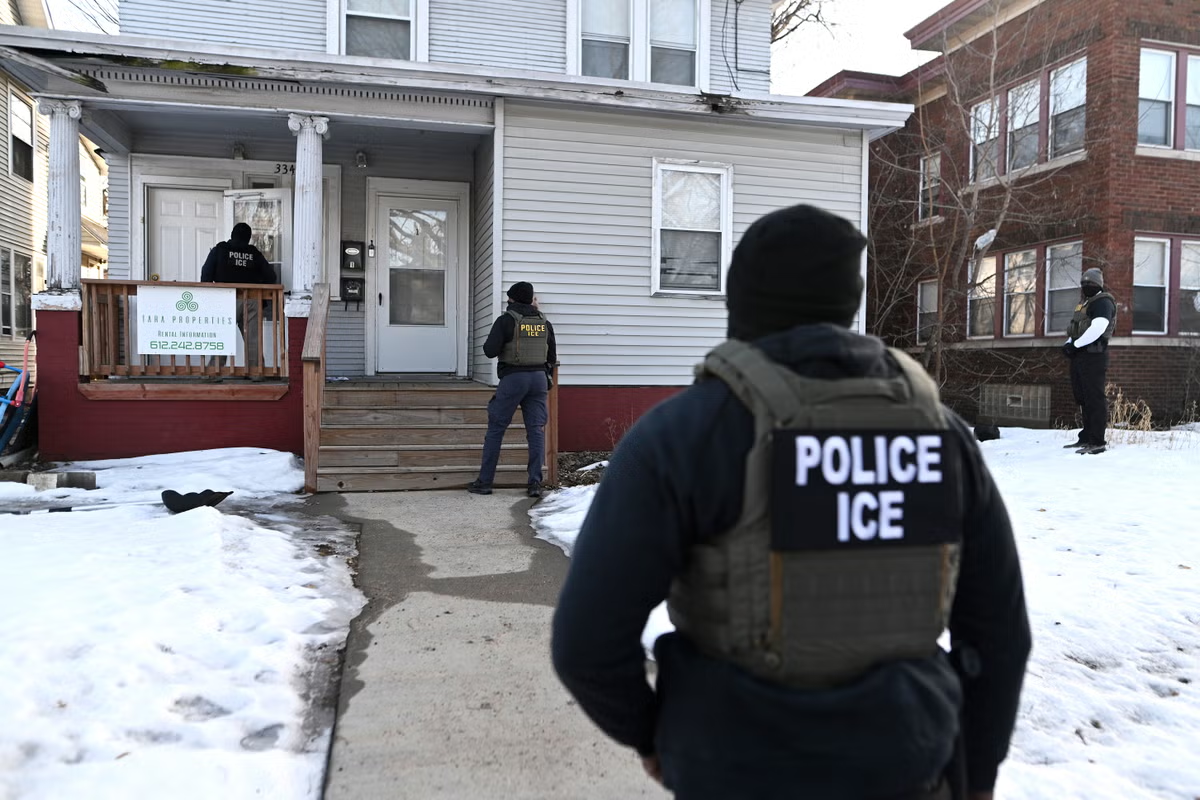
Thursday’s decision opens the door for the administration to strip TPS for roughly 1.3 million immigrants from a dozen other countries, continuing the president’s escalating threats against legal immigration pathways in his mass deportation efforts.
Asked whether immigration authorities will deport anyone who loses TPS status as a result of the ruling, Stephen Miller, the architect of Trump’s anti-immigration agenda, said, “Of course.”
“If you no longer have status in this country, then you’re supposed to be deported,” he said.
On X, his wife Katie Miller posted: “Great news for the dogs and cats of Springfield.”
Congress created the TPS program in 1990 to provide temporary immigration protections for people fleeing war, natural disasters and “extraordinary and temporary” conditions in their home countries. Beneficiaries are allowed to apply for renewable work permits and gain protection against deportation.
A TPS designation for Haiti was first opened in 2010 following an earthquake that killed more than 200,000 people.
Federal courts last year blocked the government from ending TPS after judges determined the administration had illegally and arbitrarily revoked protections on baseless, pretextual grounds fueled by “racial animus” and an anti-immigrant agenda.
Thursday’s 6-3 decision, written by Justice Samuel Alito, argued that “none of the cited statements” from Trump or former Homeland Security Secretary Kristi Noem were “overtly racial, and in substance all expressed policy views that could rest on race-neutral justifications.”
“Political discourse by prominent public figures is increasingly couched in terms that would have scandalized the public just a short time ago,” Alito wrote. “But whatever one may think of the cited statements, they are insufficient to show that the termination of Haiti’s TPS designation was based on the race of the Haitian people.”
Alito, however, didn’t mention what Trump and administration officials said.
In her dissent, Justice Elena Kagan listed several of them, from “eating the dogs” to saying they “probably have AIDS” and calling Haiti a “s***hole country” that is “filthy, dirty [and] disgusting.” Haitian immigration is “like a death wish for our country,” while immigrants are “poisoning the blood” of our country, Kagan quoted.
“The majority briefly replies that those remarks are not ‘overtly racial’ … but it is hard to know what that means,” Kagan wrote.
“The references — of filth, disease, and primitiveness — are shot through with racial stereotypes and tropes. It is hard to imagine the statements being made today of any White community,” she added. “The statements fairly shout, in their racial undertones and overtones alike, that race entered into the president’s resolve to remove Haitians from this country.”
The administration’s insistence that TPS holders can safely return to their home countries is contradicted by the federal government’s own statements; the State Department warns Americans against traveling to both Haiti and Syria, countries grappling with dire humanitarian needs and political collapse.
The Supreme Court’s ruling “will directly result in thousands of innocent people dying violent, needless deaths,” according to Geoff Pipoly and Andy Tauber, who served as counsel in the case before the court.
“This decision will endanger Haitian TPS holders who fled their homeland in pursuit of what generations of immigrants yearned for when they made the painful decision to leave all they have known: to live in safety,” they said.
Thousands of Haitian families like Dorsainvil’s are now living in fear for what’s to come, he said.