
For eight years, Nancy Umeh and her husband waited.
They hoped, tried, and prayed for a child. But what should have been a journey into parenthood became a cycle of heartbreak.
Miscarriages followed hopeful moments. Medical consultations led to treatments. Treatments led to more questions.

And after years of searching for answers, they arrived at a reality they never imagined they would have to consider.
“We had lost all hope; we tried for eight years. We started trying, and we discovered that something was wrong.
“Miscarriages started happening shortly after. It was the miscarriages that eventually led us into several rounds of IVF and, ultimately, surrogacy when we discovered that it was my uterus that was not allowing the baby to stay,” she said.
For Umeh, surrogacy became the path forward after years of infertility, repeated pregnancy losses and unsuccessful fertility treatments. Her story reflects the experience of many Nigerians who are increasingly turning to surrogacy as they search for solutions to infertility and other reproductive challenges.

According to the World Health Organisation (WHO), one in six people globally experiences infertility at some point in their reproductive lives. The challenge affects many Nigerians and has contributed to growing interest in alternative family-building options such as surrogacy.

Surrogacy is gradually emerging as an alternative path to parenthood in Nigeria, driven by infertility, social pressure to have children, and increasing demand among both married couples and single parents.
The Hidden World
Surrogacy is an arrangement in which a woman, known as a surrogate mother, carries and delivers a baby for another person or couple who are unable to conceive or carry a pregnancy to term. Following the birth, the child is handed over to the intended parents.
While comprehensive data on the practice remains scarce, fertility experts and reproductive health associations say surrogacy is growing across West Africa, including Nigeria, though much of the industry operates quietly and remains largely under-reported.
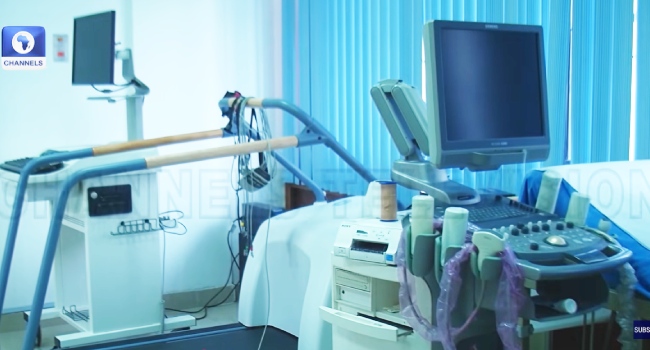
Medical sonographer Abiola Adewusi, who has more than 20 years of experience in clinical fertility management, explained that surrogacy is different from egg donation. According to her, when a patient experiencing infertility is advised by a doctor to use a donor, it does not mean the donor is giving up all her eggs.
“If a patient presents with infertility and the doctor recommends a donor, it doesn’t mean we are harvesting all of the donor’s eggs and leaving her without any for her own future use,” said Adewusi.

For many people, surrogacy remains a largely unseen process. Yet behind every arrangement are intended parents longing for a child, medical professionals guiding the process, and women willing to carry pregnancies on behalf of others.
For Umeh, the years of trying were filled with determination and an unrelenting search for answers.
According to her, the journey involved numerous attempts to improve her chances of carrying a pregnancy to term, including medical procedures and lifestyle changes.
“At the time, I would do different procedures. I would get acupuncture, change my diet, stop eating fish one month and meat the next, just hoping that would fix my uterus. But it didn’t. Eventually, we knew we had to use a surrogate,” she added.
Behind every surrogacy journey is not just science and medical intervention, but also the women who choose to carry pregnancies on behalf of others.

One surrogate, who spoke to Channels Television on condition of anonymity, described the decision as a deeply personal one driven by empathy for couples struggling to have children.
“My motivation for being a surrogate was that I feel like helping couples who don’t have children because I know what they go through. I just wanted to help them, bring that joy into their home, and let them experience the happiness of having a child,” she said.
Her words capture a side of surrogacy that often escapes public discussion — the role of women who voluntarily choose to help others experience parenthood.
Myths Vs Real Story
For many Nigerians, surrogacy remains unfamiliar and often misunderstood.
READ ALSO: Women Shouldn’t Be Shamed For Fertility Struggles – Chimamanda
Adewusi said surrogacy is a medically guided process and not a practice that can be undertaken on personal preference alone.
“It’s a medical condition, and it has to be diagnosed by a professional to say, yes, you’re qualified to use a surrogate. You can’t just wake up and say, oh, I’m too posh to push, I don’t want to have a baby bump,” the medical sonographer said.
She also addressed common misconceptions surrounding the practice, particularly the belief that surrogacy involves taking a baby away from another woman.
“It is not acceptable under the umbrella of AFRH. For surrogates, the misconception is that you are snatching the baby of a surrogate and giving it to someone else. This is not a baby-making factory,” she said.

Explaining the medical process, she noted that surrogacy involves assisted reproductive technology in which the eggs and sperm of the intended parents are fertilised in a laboratory before the resulting embryo is transferred to the surrogate.
“So we are using the eggs and sperm of the patients, the intended parents, and fertilising them in the lab, then placing the developed embryo into the surrogate so she can incubate and carry the baby,” she added.
On the cost of the procedure, Adewusi added that surrogacy typically ranges between ₦18 million and ₦20 million on average, with a significant portion of the payment going to the surrogate as part of her welfare and compensation.
“Surrogacy, I would say, on average, would cost between ₦18 to ₦20 million. And of course, the surrogate would get a chunk of that money as part of her welfare,” she said.

Even as awareness grows, misconceptions continue to shape public perception of a process that experts say is guided by medical evaluation and professional oversight.
Faith And Fertility: Forbidden Or Accepted?
Religious perspectives on surrogacy in Nigeria remain divided, with varying interpretations shaping how the practice is viewed across faith groups.
The Chairman of the Christian Association of Nigeria (CAN), Lagos State chapter, Rt. Rev. Stephen Adegbite, said the Church should be open to supporting the practice, particularly for couples struggling with infertility.
“The Church is in tune with anything that will make people happy. And if surrogacy is the way out, we should encourage such. For somebody not to have a child for 10 years, 20 years, 25 years, you may not fully understand what they are going through,” Adegbite said.

However, views within the Islamic community differ.
A member of The Muslim Congress of Nigeria, Fajana Aqib, said surrogacy is not encouraged in Islam, describing it as contrary to religious teachings.
“It’s like granting a womb. Vehemently in Islam, it is haram. Islam does not encourage such and does not support it. If eventually the baby grows up, who is his rightful parent? Islam is more in line with adoption,” Aqib said.

Experts say surrogacy is often an emotional journey shaped by hope, sacrifice and, at times, social stigma.
Psychiatrist Dr. Maymunah Kadiri explained that in a country like Nigeria, surrogacy can attract judgment and misunderstanding, affecting both intended parents and those involved in the process.
“Like in Nigeria, surrogacy can attract whispers, questions like, ‘how can she carry another person’s child?’ or ‘she sold her womb.’ Some mothers also fear they may not bond with the baby since they did not carry the pregnancy. Fathers, on the other hand, may struggle with emotional distance during the process,” she said.
The emotional burden, experts say, extends beyond the medical process, touching relationships, identity and the way society views both intended parents and surrogate mothers.
Legal Grey Areas

In Nigeria, there is no clear legal framework governing surrogacy, a gap that has raised ethical concerns about potential exploitation, particularly of women and girls from low-income communities. This contrasts with countries such as South Africa, where surrogacy is legally regulated.
Chairman of the House Committee on Health Services, Amos Magaji, said a bill on surrogacy is currently receiving legislative attention in the National Assembly.
“Yes, South African law may serve as a benchmark. But in developing our legislation, we need to consider our culture and other surrounding factors.
“Currently, we have a bill that has gone through a public hearing. Very soon, when we resume, the bill will be laid before the House. Then we will move to the third reading, where there will be an in-house debate,” he said.

Meanwhile, legal practitioner Lekan Ayinla said the absence of clear legislation creates uncertainty around surrogacy agreements in Nigeria.
“There is no specific regulation or law that says a surrogacy contract is illegal. At the same time, there is no enabling law that guarantees any legal remedy from that kind of arrangement,” he said.

As more Nigerians turn to surrogacy in their search for parenthood, lawmakers say efforts are underway to establish a clear legal framework to regulate the practice.
Until then, intended parents and surrogate mothers continue to navigate a process shaped by hope, medical intervention, faith, social perception and legal uncertainty.
For people like Nancy Umeh, however, the story of surrogacy begins long before laws and public debates. It begins with years of trying, years of loss, and the determination to keep searching for a way forward.
And for the women who choose to carry pregnancies on behalf of others, it is a chance to bring joy into homes that have waited a long time for the happiness of having a child.