For many young people, travel is often imagined as an exciting rite of passage — a chance to explore new cultures, make memories and discover who they are. But for countless first-time travellers, especially those venturing from relatively comfortable backgrounds into less affluent parts of the world, the experience can be confronting in ways they never expected.
It is one thing to hear about poverty, inequality and human suffering through news reports or social media. It is another thing entirely to walk through communities where families live without reliable electricity, clean water or access to healthcare. It is another thing to meet children whose opportunities in life have been largely determined by the circumstances of their birth.
Many young travellers describe a feeling of profound disconnect. They return home struggling to reconcile the enormous contrast between the world they have known and the realities faced by billions of others. Why should some people enjoy abundance while others face daily hardship? Why does a world capable of extraordinary technological achievement still contain such deep inequality?
These questions can be deeply unsettling because they expose a contradiction at the heart of modern civilisation. We live in an age of unprecedented wealth and knowledge, yet poverty, conflict and social division remain widespread. For young people already navigating uncertainty about the future — from housing affordability and climate concerns to political instability and mental health challenges — witnessing global inequality firsthand can intensify a sense that something is fundamentally wrong.
At the same time, these experiences often awaken a powerful desire to help. Many travellers return with a greater appreciation of their own circumstances and a stronger commitment to contributing positively to society. Yet they also discover that solving humanity’s problems is far more complex than simply providing resources or good intentions.
This is where some organisations are attempting to explore deeper explanations for the causes of human conflict and suffering. One such initiative is Fix The World, a nonprofit dedicated to promoting the work of Australian biologist Jeremy Griffith on the “human condition”. The organisation argues that while humanity has made remarkable progress in science and technology, we have long lacked a satisfactory understanding of human behaviour itself.
Central to Griffith’s explanation of the human condition is the conflict between instinct and intellect. He argues that as human consciousness evolved, our conscious mind’s drive to question, explore and understand came into tension with instinctive behaviours shaped by genetic selection. According to Griffith, this unresolved conflict gave rise to psychological distress and defensive behaviours such as anger, egocentricity and alienation. He maintains that understanding the source of this conflict can help free humanity from these defensive responses, opening the way for psychological healing and human advancement.
Fix The World says that resolving this long-standing question is essential because lasting peace and cooperation cannot be built solely through political, economic or technological solutions. In its view, people need an understanding that addresses the underlying psychological causes of conflict and division. The organisation believes Jeremy Griffith’s work provides that explanation and offers a pathway towards a more united and compassionate world.
The questions it seeks to address resonate strongly with many young people. After witnessing inequality and hardship firsthand, it is natural to wonder not only how the world became this way, but why human societies continue to struggle to overcome these challenges despite our immense intelligence and resources.
Travel can therefore become much more than an adventure. It can be an education in the realities of the human experience. It can challenge assumptions, broaden perspectives and inspire a lifelong search for understanding.
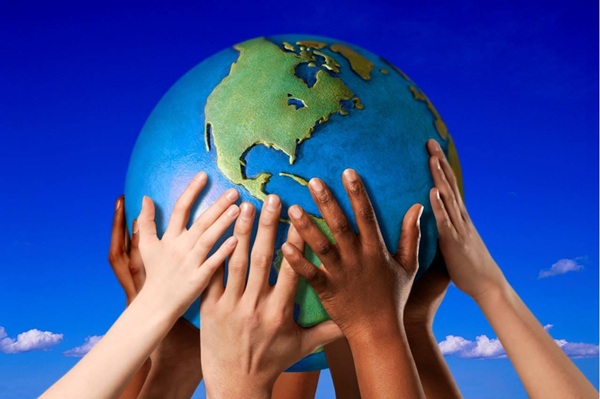
For many young people, the greatest souvenir they bring home is not a photograph or a keepsake. It is a deeper awareness of humanity’s shared fate. The faces they meet and the stories they hear become reminders that behind differences in nationality, culture or circumstance, people everywhere share the same hopes for safety, dignity, opportunity and meaning.
And perhaps that is the most valuable lesson travel can teach: that despite the inequalities and divisions that continue to scar our world, our common humanity remains far greater than the things that separate us.