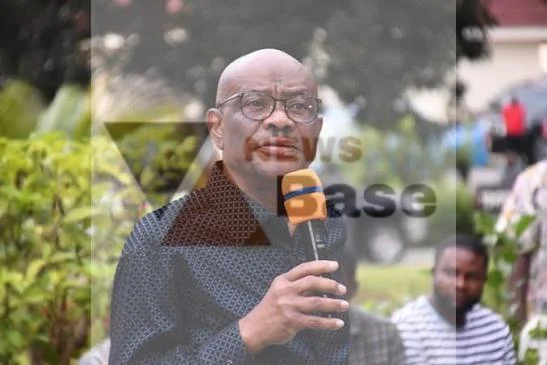
Abuja, Nigeria — The Minister of the Federal Capital Territory (FCT), Nyesom Wike, has described President Bola Ahmed Tinubu’s administration as one that is actively transforming Nigeria through large-scale infrastructure development across key sectors of the economy.
Wike made the remarks during recent public engagements and project inspection activities in Abuja, where he highlighted ongoing federal and FCT infrastructure works as evidence of what he called a renewed commitment to national development.
According to him, the administration of President Tinubu is prioritizing critical infrastructure such as roads, bridges, housing, and transportation networks in a way that is already producing visible results.
He noted that leadership should be assessed based on tangible delivery rather than political promises, insisting that ongoing projects under the current administration reflect deliberate planning and execution.
Among the infrastructure projects frequently referenced under the current administration are major road rehabilitation works, inter-state highway expansions, and urban renewal projects within the Federal Capital Territory.
These include major arterial roads in Abuja, national highway corridors connecting different regions, and ongoing efforts to improve transport and logistics infrastructure aimed at boosting economic activity and reducing travel time across the country.
Wike emphasized that the Federal Capital Territory has witnessed accelerated development activities, attributing the progress to strong support from President Tinubu.
He added that the collaboration between federal and FCT authorities has helped unlock previously delayed or abandoned projects, leading to renewed construction activity in key areas.
Since assuming office, Bola Ahmed Tinubu has positioned infrastructure development as a central pillar of his administration’s “Renewed Hope Agenda,” which focuses on economic reform, national integration, and improved public services.
The administration has consistently argued that investment in roads, power, rail, and housing is essential to long-term economic growth, job creation, and private sector expansion.
Government officials say the strategy also involves encouraging public-private partnerships to bridge Nigeria’s infrastructure funding gap and ensure faster project delivery.
Some Nigerians argue that while infrastructure development is visible, broader economic challenges such as inflation and cost of living pressures continue to affect households.