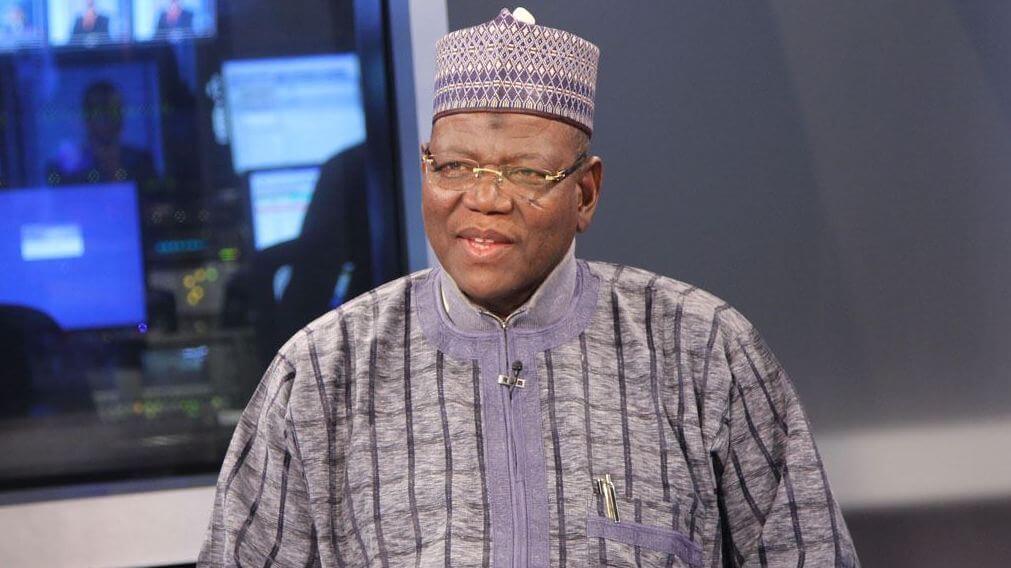
Mr Lamido and his sons, Aminu and Mustapha, are standing trial on 37 money laundering charges involving N1.35 billion in alleged proceeds of kickbacks and fictitious contract awards.
The trial of former Jigawa State Governor Sule Lamido and his two sons over alleged N1.35 billion fraud stalled on Monday at the Federal High Court in Abuja.
The proceedings did not continue as scheduled because the lead defence lawyer, Joe Agi, a Senior Advocate of Nigeria (SAN). His absence was said to be on health grounds.
The Economic and Financial Crimes Commission (EFCC) disclosed this in a statement issued on Monday by its Head of Media and Publicity, Dele Oyewale.
Mr Lamido and his sons, Aminu and Mustapha, are standing trial on 37 money laundering charges involving N1.35 billion in alleged proceeds of kickbacks and fictitious contract awards.
Mr Lamido and his co-defendants allegedly committed the offences while he was serving as governor of Jigawa State between 2007 and 2015.
According to the statement, the prosecution lawyer, Chile Okoroma, a SAN, informed Judge Ijeoma Ojukwu that Mr Agi had written to explain his absence on medical grounds after undergoing surgery and requested an adjournment.
Mr Okoroma wished the defence lawyer a speedy recovery but argued that another member of Mr Agi’s legal team ought to have appeared so the trial could continue, according to the EFCC statement.
“Another counsel in his team ought to have appeared for him so that the trial can continue, especially as the matter has lingered in court since 2015,” Mr Okoroma was quoted as saying.
The prosecution lawyer also expressed concerns that the judge travelled from her judicial division in Calabar, Cross River State, to preside over the matter at the Federal High Court in Abuja.
Hence, Mr Okoroma urged the court to grant only a one-day adjournment.
Judge Ojukwu granted the request and adjourned the case for continuation of trial.
The case has remained in court for more than a decade since the EFCC filed the charges against Mr Lamido, his sons, Aminu and Mustapha, Aminu Wada Abubakar and two companies, Bamaina Holdings Limited and Speeds International Limited, in 2015.
The anti-graft agency accused the defendants of diverting about N1.35 billion from Jigawa State through alleged money laundering, kickbacks and fictitious contract awards during Mr Lamido’s tenure as governor between 2007 and 2015.
They all pleaded not guilty.
After calling 17 witnesses and closing its case, the EFCC urged the court to order the defendants to open their defence.
In November 2022, Judge Ojukwu agreed with the prosecution and dismissed the defendants’ no-case submission.
But the Court of Appeal set aside the ruling on appeal by the defendants and discharged them.
The appellate court held that the Federal High Court in Abuja lacked territorial jurisdiction to hear the case because the alleged offences were allegedly committed in Jigawa State.
Meanwhile, the Supreme Court overturned that decision in January and restored Judge Ojukwu’s ruling, directing the defendants to return to the Federal High Court to continue their defence.
Following the Supreme Court’s judgement, the case was reassigned to Judge Peter Lifu for re-arraignment.
But the exercise did not proceed after the prosecution insisted that the matter should return to Judge Ojukwu, who had heard all the prosecution witnesses and was familiar with the evidence already led before the court.
The prosecution informed the court that it wrote to the Chief Judge requesting the reassignment.
The matter was eventually returned to Judge Ojukwu, and the defence opened its case in June.
At the last hearing on 2 June, proceedings centred on documents obtained through a subpoena issued to the EFCC chairman.
An investigator produced by the commission admitted under cross-examination that he was not a member of the team that investigated the case.
Defence lawyers argued that the witness had no personal knowledge of the investigation, while the prosecution maintained that it had complied with the subpoena by producing the requested documents.
Judge Ojukwu admitted the documents in evidence and directed that the trial should continue.