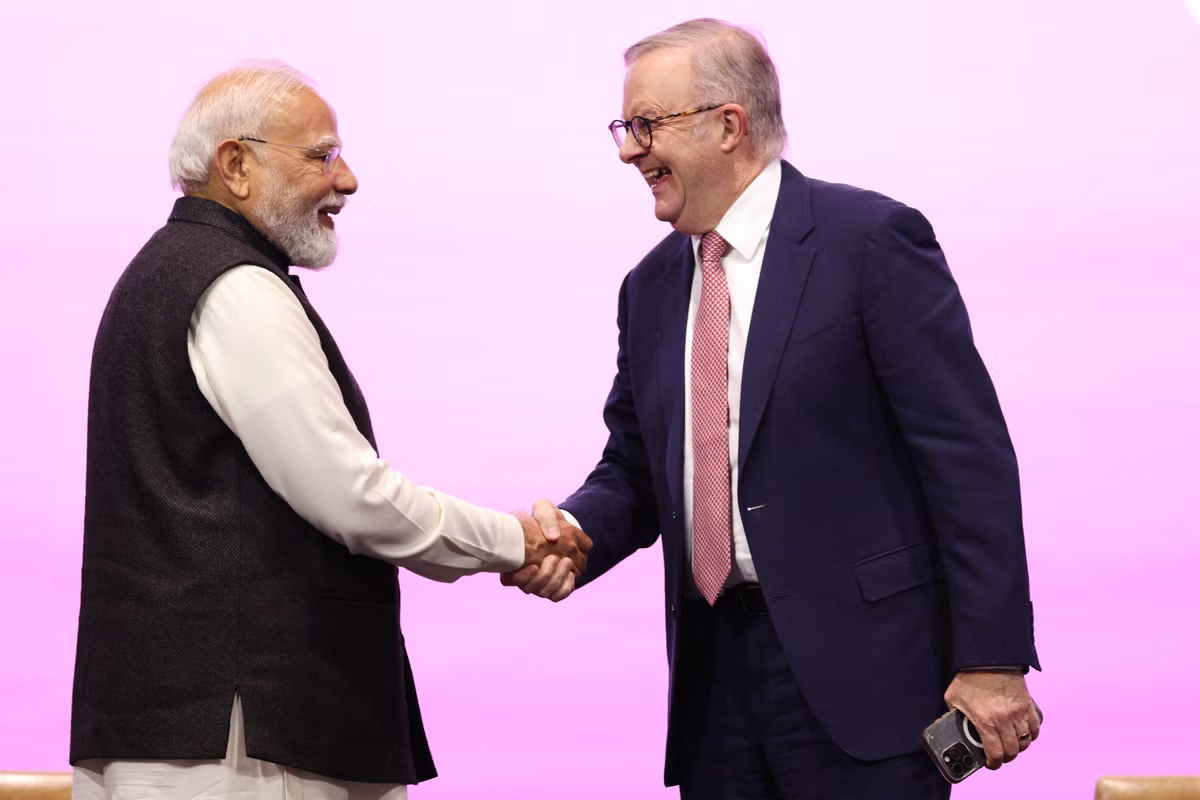
The Commission, which met in Geneva from July 6 to 10, also accepted India’s request to serve as co-chair of a newly formed Electronic Working Group (EWG) that will develop guidance on risk analysis for new food products.
The Codex Alimentarius Commission, jointly established by the Food and Agriculture Organization (FAO) and the World Health Organization (WHO), develops internationally recognised food safety and quality standards that facilitate global trade and protect consumer health.
India played a central role in developing the three spice standards through the Codex Committee on Spices and Culinary Herbs (CCSCH), which it hosts. The standards were finalised during the committee’s eighth session in Guwahati in October 2025 before receiving approvals from other Codex committees and final adoption by the Commission.
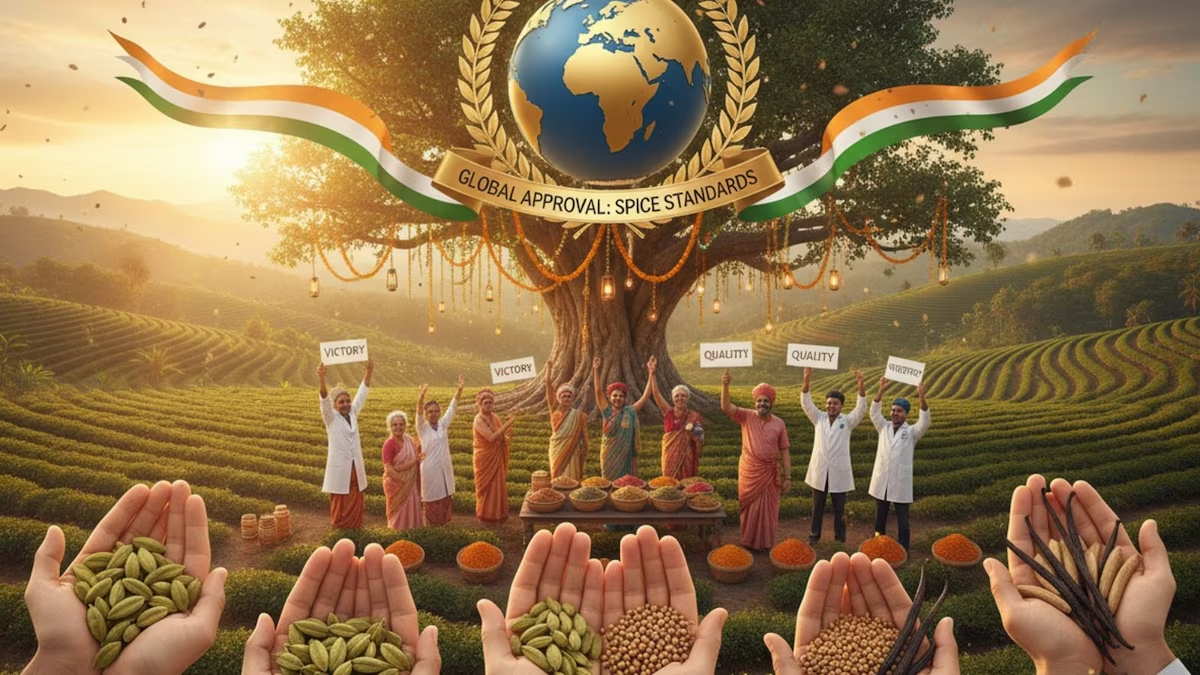
The new standards establish common international quality benchmarks for large cardamom, coriander and vanilla, a move expected to make global trade smoother by reducing differences in quality requirements across countries.
For India, one of the world’s largest producers and exporters of large cardamom and coriander, the standards are expected to improve market access, promote fair trade and enhance export competitiveness.
The standard for large cardamom is also expected to support exports from India’s North-Eastern Himalayan region, where the crop is primarily grown.
While India imports much of its vanilla requirement, the new vanilla standard provides a globally accepted quality framework that could improve consistency in international trade and strengthen consumer confidence.
Separately, the Commission constituted an Electronic Working Group to develop policy guidance on risk analysis for new food products, with the European Union as chair and India as co-chair. The Commerce Ministry said the appointment reflects India’s growing role in shaping international food standards.
Also Read: NEET UG 2026 results out; 11.21 lakh qualify, 19 candidates score above 700