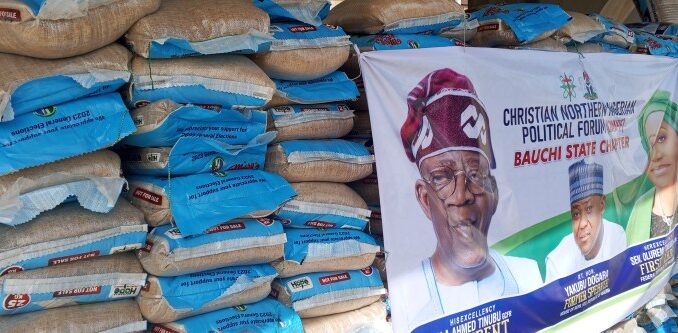
Stacks of rice bags branded with the image of President Bola Ahmed Tinubu have surfaced on social media, reportedly prepared for distribution among members of the All Progressives Congress (APC). The footage, which has quickly gained traction on platforms like X and TikTok, highlights ongoing political engagement strategies ahead of key party activities.
In the video, numerous bags of rice are neatly arranged in what appears to be a storage facility or warehouse. Each bag carries a printed image of President Tinubu, reinforcing party identity and messaging.
Supporters present at the scene can be heard expressing excitement as preparations for distribution continue, suggesting that the items are intended as welfare support for loyal party members and grassroots mobilization.
The development has drawn mixed reactions from the public. While some APC supporters see the gesture as a form of appreciation and a way to keep the party base engaged, critics argue that such distributions raise concerns about political patronage and voter influence. Comments online range from praise for “taking care of the grassroots” to questions about timing, transparency, and whether branded items blur the line between welfare and campaigning.
This is not the first time food items or branded materials have been used in Nigerian politics to connect with constituents at the community level. Across party lines, distribution of rice, beans, noodles, and other staples has long been a feature of political engagement, especially during holidays, party conventions, and election cycles. Proponents say it provides direct relief in a period of rising food costs and economic pressure. Critics counter that it can create dependency and may be used to sway political loyalty.
Political analysts note that welfare distribution in the form of food items has deep roots in Nigeria’s political culture. However, the visibility of branding, particularly featuring high-profile figures like Tinubu, often intensifies debate about the line between genuine support initiatives and political campaigning. The use of a president’s image on consumer goods has become a common tactic for building name recognition and reinforcing partisan identity….See More