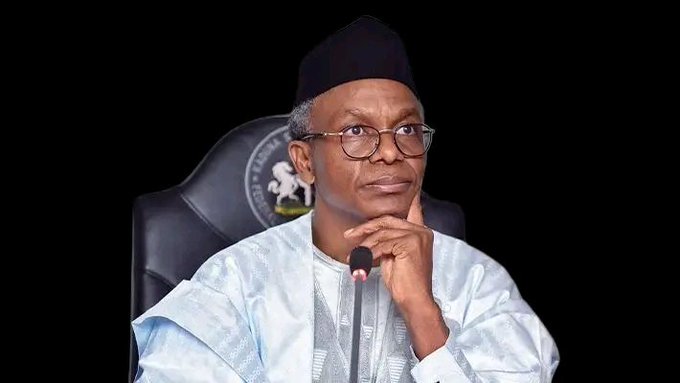
(Nasir El-Rufai. Photo Credit: X.com)
The situation surrounding El-Rufai carries lessons that go far beyond one individual. It speaks to the nature of power, the dangers of pride, and the false sense of invincibility that often comes with holding authority.
Those in power frequently lose sight of the fact that their time at the top is limited.
They issue commands, influence institutions, sideline opponents, disregard court orders, and treat any form of criticism as a threat all while believing they are beyond reach.
But democracy carries a quiet and inevitable equaliser: time. Every governor eventually becomes an ordinary citizen. Every president eventually becomes a former one. Every seemingly untouchable figure eventually becomes answerable.
This is precisely why power must be exercised with restraint, fairness, humility, and genuine respect for the law.
During his time as governor of Kaduna State, Mallam Nasir El-Rufai faced consistent accusations of overstepping his authority. Many felt he wielded power too forcefully, particularly in situations that called for dialogue and institutional respect.
Those criticisms were legitimate. However, that does not justify what appears to be a coordinated effort to persecute him now.
A wrong does not become right simply because the person on the receiving end once committed wrongs of their own.
If El-Rufai abused power while in office, that deserves condemnation. Equally, if the federal government, the Kaduna State Government, or the ICPC is now weaponising state machinery against him for political reasons, that too deserves condemnation. is not the same as revenge, and the law must never be reduced to a tool for settling political scores against former allies who have fallen out of favour.
Perhaps the most striking aspect of all this is that President Tinubu, Governor Uba Sani, and those around them do not appear to be drawing any lessons from what is unfolding before their eyes. Not long ago, El-Rufai himself enjoyed immunity, commanded enormous influence, and was widely feared.
Today, he is experiencing firsthand the vulnerability that comes with being a private citizen facing the full weight of state power.
That same reality is ahead for every person currently in authority. Immunity will expire. Convoys will be withdrawn. Security details will shrink. Those who pledged loyalty will shift their allegiance to whoever holds power next.
The very institutions being used today can just as easily be turned against their current operators by a future government.
This is why true leadership demands the building of strong, independent institutions rather than personal empires.
A country where the executive can manipulate the legislature, sway the judiciary, and direct law enforcement agencies at will is not fully practising democracy it is simply civilian rule without adequate checks.
The hope is that Nigeria’s leaders come to understand that power is a responsibility held in trust, not a permanent possession.
Because once power is gone, the only real protection that remains is a just and fair system and that system can only exist if those in power choose to respect it while they still can.