Justice Joyce Abdulmalik of the Federal High Court, Abuja, on Monday granted bail in the sum of N5 million with one surety in like sum to popular blogger and social media influencer Chidiebere Justice Mark, widely known as Justice Crack, who is being prosecuted by the Department of State Services (DSS) over alleged cybercrime offences linked to a viral video concerning the Nigerian Army.
The bail came after the federal government opened its case against the blogger by calling its first witness, a DSS operative who made a significant disclosure in court that Justice Crack received pictures and welfare complaints directly from serving Nigerian soldiers, which he then posted on his social media platforms. The revelation that the content originated from soldiers within the military itself, rather than being fabricated by the blogger, adds a critical dimension to a case that has attracted intense public attention and debate over press freedom, whistleblowing, and the treatment of military personnel.
However, the proceedings were marred by chaotic and violent scenes outside the courtroom, as DSS operatives, Nigeria Police Force personnel, and court security officials harassed, assaulted, and forcefully restricted access of lawyers, journalists, and members of the public to the court premises including human rights activist Omoyele Sowore, who was physically wrestled by security operatives while trying to enter the court.
The hearing of Justice Crack’s bail application had been stalled the previous Thursday due to a dramatic dispute between two lawyers who claimed to have been contracted to represent the blogger a debacle that saw Barrister Marshall Abubakar withdraw the bail application he had filed, leaving the activist in continued detention and reducing his wife to tears in open court.
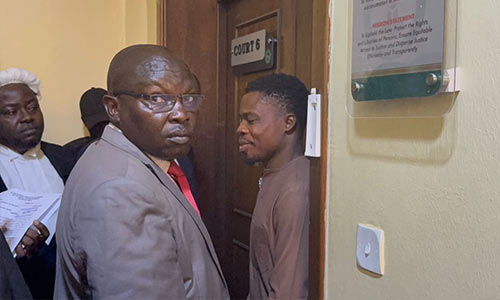
On Monday, with the legal team dispute apparently resolved, the matter proceeded before Justice Abdulmalik. The court granted bail to Justice Crack in the sum of N5 million with one surety in like sum, ending weeks of detention that had generated nationwide outrage, calls from lawyers for disciplinary action against Abubakar, and mounting concerns about the use of cybercrime laws to suppress dissent.
The federal government opened its case against Justice Crack by calling its first witness, Uruntu Douglas, an operative of the DSS. Douglas told the court that he took the extrajudicial statement of the defendant when Justice Crack was transferred to DSS custody by the Nigerian Army Intelligence Defence Corps.
The witness stated that Justice Crack gave his statement voluntarily and that data was extracted from his phone. In a disclosure likely to attract significant public attention, Douglas revealed that the extracted data included pictures Justice Crack received from serving soldiers who decried their welfare conditions. The blogger then posted this material on his Instagram, Facebook, X (formerly Twitter), YouTube, and TikTok accounts.
The pages of these social media accounts were tendered and admitted as exhibits by the court.
The revelation that the content at the centre of the prosecution was sourced from soldiers themselves — who apparently reached out to Justice Crack as a social media influencer with a platform to amplify their grievances — raises fundamental questions about the nature of the charges. If the information was provided by soldiers from within the military establishment and reflected genuine welfare concerns, the prosecution’s characterisation of the content as “false information” capable of causing public unrest becomes significantly more difficult to sustain.
Counsel to the defendant objected to the tendering of a flash drive and Justice Crack’s phone as exhibits, arguing that the defence had not been furnished with the contents of these devices. The objection raises important fair trial concerns, as the defence is entitled to know the full scope of the evidence being used against the accused in order to prepare an adequate response.
The court’s ruling on the admissibility of these devices will be a critical issue as the trial progresses.
The DSS, in the charge marked FHC/ABJ/CR/253/2026, sued Justice Crack as sole defendant over alleged cybercrime offences linked to a viral video concerning the Nigerian Army. The blogger was accused of circulating false information and publication of materials capable of causing public unrest.
One of the charges states that Justice Crack, on or about April 28, 2026, from his address at Plot 88 Sabon-Lugbe, Abuja, circulated information to the public through his social media handle @JusticeCrack regarding alleged inadequate feeding of Nigerian Army personnel, which the prosecution claims he knew to be false but posted for the purpose of causing annoyance, ill will, and hatred, contrary to Section 24(1)(b) of the Cybercrimes (Prohibition, Prevention, etc.) Act, 2015, as amended.
Justice Crack was originally arrested by the Nigerian Army before being transferred to DSS custody. A lawyer from the Federal Ministry of Justice had informed the court the previous Thursday that the Attorney-General of the Federation had taken over the prosecution of the matter from the DSS in line with the relevant provisions of the law. The Director of Public Prosecutions of the Federation, Rotimi Oyedepo, SAN, is now overseeing the prosecution.
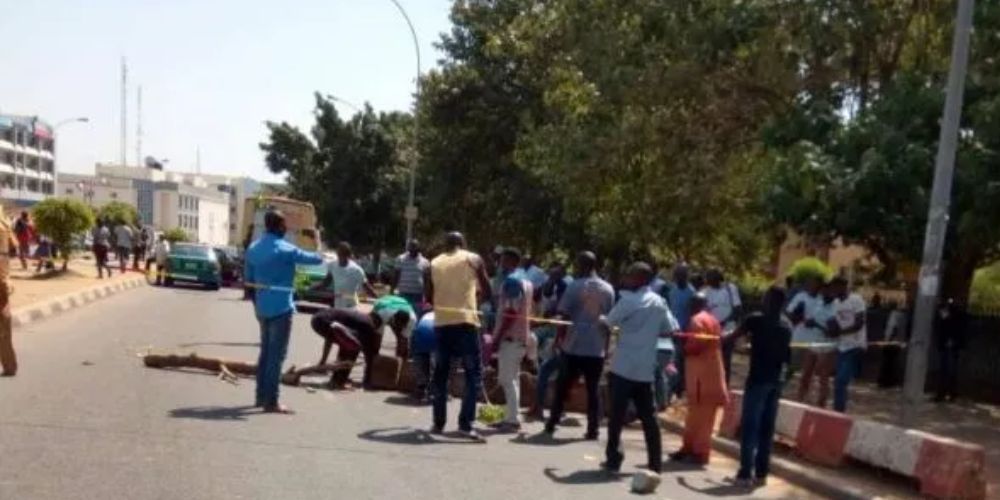
While proceedings inside the courtroom progressed to the point of bail being granted, the scene outside the Federal High Court in Abuja descended into chaos as heavily armed security operatives forcefully restricted access to the court premises and manhandled individuals including lawyers, journalists, and members of the public.
Human rights activist Omoyele Sowore was caught in the melee as DSS operatives and court security personnel manning the gate wrestled violently with him, preventing him from accessing the court. Sowore insisted that he had a separate case before Justice Mohammed Umar bordering on alleged cyberbullying of President Bola Ahmed Tinubu, but the operatives turned a deaf ear to his explanations.
Many lawyers and journalists handling different cases at the Federal High Court were also left stranded at the gate despite identifying themselves and presenting their credentials. The blanket restriction on access affected not only those connected to the Justice Crack case but also legal practitioners and media professionals who had unrelated matters before various judges in the same court complex.
Some of the affected lawyers accused DSS operatives and court security personnel of using excessive force and intimidation. In one incident, a lawyer was allegedly thrown out and physically assaulted by a court security official after questioning the basis for the restriction, leading to an altercation that nearly degenerated into a fistfight.
Supporters of Justice Crack had gathered peacefully around the court premises in solidarity with the blogger, whose bail application was the most anticipated matter of the day. The peaceful gathering contrasted sharply with the heavy-handed response of security operatives, whose deployment of armed DSS agents, police officers, and court security personnel to restrict access to a civilian court drew immediate condemnation.
Human rights advocates and civil society groups had condemned the security deployment the previous week, describing the excessive presence of armed security operatives — including soldiers, DSS agents, and police personnel — as an abuse of power and a violation of the sanctity of the judiciary.
The restriction of access to a court of law during public proceedings is particularly concerning because it undermines the constitutional principle of open justice and the right of accused persons to a public trial. Courts are public institutions, and the right of lawyers, journalists, and members of the public to access court premises and observe proceedings is a fundamental feature of the rule of law.
Justice Crack’s case has become a lightning rod for national debate about the boundaries of free expression, the use of cybercrime legislation to suppress criticism of security agencies, and the treatment of whistleblowers who amplify the grievances of serving military personnel.
The DSS witness’s own testimony — that the content originated from soldiers who contacted Justice Crack to complain about their welfare has potentially shifted the narrative from one of a blogger spreading false information to one of a citizen amplifying genuine concerns raised by military personnel themselves. If the soldiers’ complaints about inadequate feeding were factual, the prosecution’s case rests on the legally and morally precarious position that sharing truthful information about military welfare amounts to a cybercrime.
The bail application had come amid mounting public outrage over allegations that the activist was tortured in military custody before being transferred to the DSS. The case has attracted widespread public attention, with supporters describing the prosecution as an attempt to suppress dissent and freedom of expression, while the authorities insist the charges are in line with existing laws regulating online publications.
With bail now granted, Justice Crack is expected to be released from detention upon meeting the bail conditions of N5 million with one surety in like sum. The trial will continue at the Federal High Court, Abuja, with the prosecution expected to call additional witnesses to support its case.
The defence’s objection to the tendering of the flash drive and phone will need to be resolved, and the prosecution will need to demonstrate that the information circulated by Justice Crack was indeed false a task made significantly more challenging by its own witness’s admission that the content was sourced from soldiers within the military who were complaining about their own welfare conditions.
The case remains one of the most closely watched criminal trials in Nigeria, with implications for press freedom, whistleblower protection, the use of cybercrime laws, and civil-military relations.