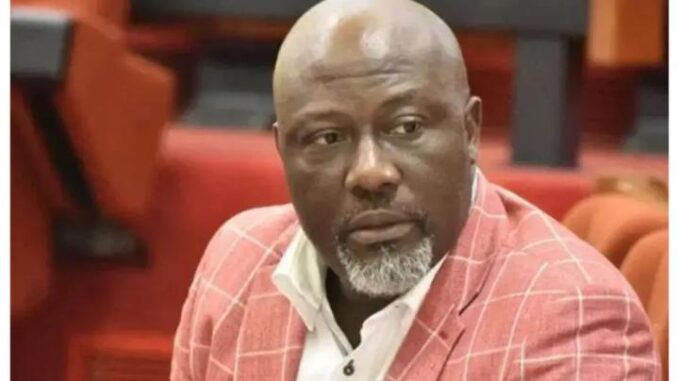
According to a report by Daily Post on Saturday, June 20, 2026, former federal lawmaker, Senator Dino Melaye, has expressed concern that President Bola Tinubu could lead Nigeria into a state of national unrest if the 2027 general election is allegedly manipulated in his favour.
Melaye made the remarks in connection with ongoing political discussions around the credibility of future elections and the conduct of political actors ahead of the 2027 electoral cycle.
He suggested that tensions could escalate depending on how the electoral process unfolds, particularly if allegations of manipulation arise during or after the polls.
In a video message shared on his Facebook page on Saturday, Melaye addressed supporters and the general public, where he issued strong comments regarding the political atmosphere in the country.
The video presentation focused on his concerns about electoral integrity and the need for what he described as a fair and transparent democratic process, which he insisted must be upheld regardless of political interests or affiliations.
Melaye further warned that if the election outcome is manipulated, the country could face a situation that might lead to heightened tensions and instability.
He referenced the possibility of Nigeria entering what he described as a “war path,” suggesting that such developments could arise from widespread dissatisfaction with the electoral process.
His remarks were presented in the context of caution about the potential consequences of disputed elections, particularly in a politically sensitive environment where trust in institutions is often debated.
He also addressed broader issues surrounding governance and political accountability, indicating that opposition forces would not accept any outcome perceived as unjust or imposed.
In his message, Melaye suggested that the opposition would demonstrate the possibility of replicating significant political events from other countries if necessary.
He specifically made reference to Indonesia as an example, using it to illustrate his point about civic response to political conditions.
His comments were framed within a wider discussion on democratic participation and resistance to perceived electoral malpractice.
The former senator maintained that political developments in Nigeria require careful attention, particularly as the nation approaches another election cycle.
He stressed that citizens and political actors alike would be closely watching the electoral process, and that any attempt to undermine it could provoke strong reactions.