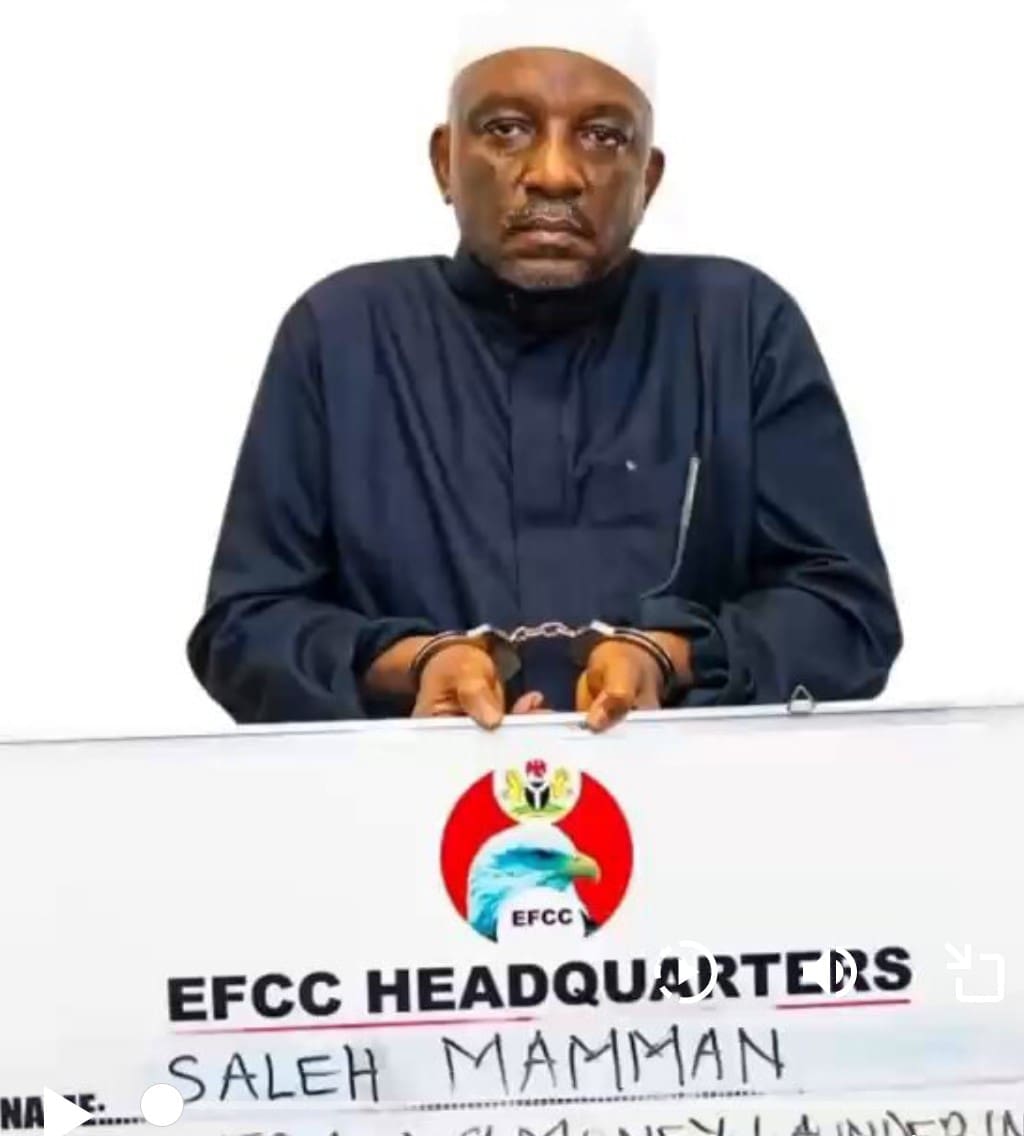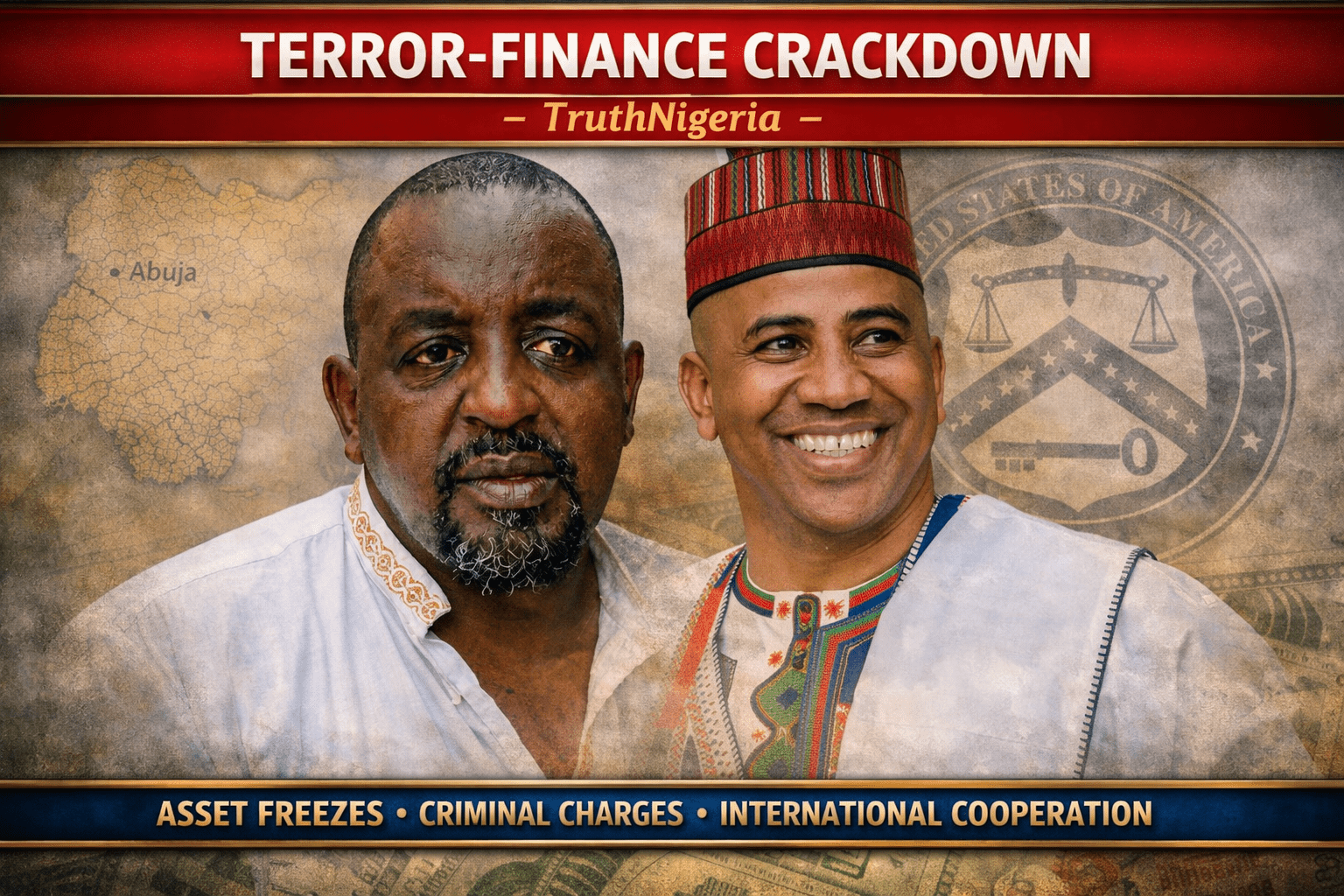
The prosecutions follow U.S. Treasury sanctions and mark a rare move against figures long seen as politically untouchable.
By Mike Odeh James and Izighe Bitrus Adamu
ABUJA, Nigeria — Nigeria has launched one of its most sweeping terror‑finance crackdowns in years, freezing bank accounts and filing criminal charges against two influential Fulani community leaders — a move that comes days after U.S. Treasury sanctions targeted alleged Islamic State West Africa Province financiers.
The two men are senior figures in Fulani community associations that have long been at the center of violent clashes in farming communities across central Nigeria.
The men are Ardo Lawal Mohammed Dono, a senior Fulani community leader in Nasarawa State, and Bello Abdullahi Bodejo, the national head of a major Fulani association. Dono is one of nine defendants charged in connection with a 2025 massacre in Benue State that killed more than 200 people, with prosecutors alleging he helped direct and finance the attack. Bodejo faces a separate 12‑count indictment accusing him of receiving roughly $2.53 million in undeclared cash — including nearly $1 million in a single payment — that investigators say was partly diverted from government funds and used to support violent networks. Both men deny wrongdoing and are presumed innocent under Nigerian law.
The Central Bank of Nigeria (CBN) on June 24 directed all banks and financial institutions to immediately freeze the funds, assets, and transactions of six designated individuals and operators of four bureaux de change.
Those named are Muktar Muhammad Adamu, Babangida Muhammed Adamu Hammajam, Abdullahi Umar Usman, Ibrahim Abubakar, Adamu Chiroma, and Yakubu Ogirima Ibrahim. The bureaux de change are Abbal Bako & Sons, Generation Currency, Manhattan, and Nine to Nine.
The directive followed a June 18 update to Nigeria’s sanctions list after the U.S. Treasury’s Office of Foreign Assets Control (OFAC) designated Muktar Muhammad Adamu, a Lagos-based foreign exchange operator, for allegedly moving money on behalf of the Islamic State West Africa Province through three bureaux de change he controlled.
The designation effectively cuts those listed off from Nigeria’s formal banking system, while foreign financial institutions that transact with them risk secondary U.S. sanctions.
A six-month campaign
The asset freeze forms part of a broader six-month campaign that has seen Nigeria strengthen its sanctions regime, embrace international financial intelligence, and pursue criminal investigations into individuals once viewed as politically untouchable.
Two of those investigations now reach the leadership of influential Fulani pastoralist organizations.
The first involves Ardo Lawal Mohammed Dono, chairman of the Nasarawa State chapter of the Miyetti Allah Cattle Breeders Association of Nigeria (MACBAN).
Dono is among nine defendants facing a 57-count terrorism-related charge arising from the June 2025 massacre in Yelwata, Guma County, Benue State, where between 200 and 270 mostly Christian residents were killed.
Prosecutors allege he directed and financed the attack, solicited financial contributions from fellow Ardos, and instructed Fulani Ethnic Militia fighters across Benue, Nasarawa, and Plateau states to participate. All nine defendants have pleaded not guilty.
The second case targets Bello Abdullahi Bodejo, national president of Miyetti Allah Kautal Hore, another influential Fulani pastoralist organization.
On June 22, Nigeria’s Economic and Financial Crimes Commission (EFCC) filed a 12-count charge accusing Bodejo of receiving approximately $2.53 million in undeclared cash between 2022 and 2024, including a single payment of about $980,000.
Investigators allege part of the money originated from Bauchi State government funds and was used to finance terrorist activities. Bodejo has not yet entered a plea and has denied wrongdoing.
Both Dono and Bodejo are presumed innocent unless proven guilty. Their organizations maintain they are peaceful advocacy groups representing Fulani pastoralists and reject allegations that they sponsor or direct armed groups
A history of controversy
The prosecutions revive longstanding allegations surrounding sections of the Fulani pastoralist movement and recurring violence across Nigeria’s Middle Belt.
Following attacks on Agatu communities in Benue State in February 2016 that left hundreds dead, prominent Fulani representatives publicly described the violence as retaliation for earlier killings of cattle owners. No criminal prosecutions followed.
The pattern resurfaced after deadly attacks on Benue’s Logo and Guma counties in January 2018. Cattle breeders’ representatives again attributed the violence to retaliation over alleged cattle rustling.
The controversy deepened after Benue enacted its Open Grazing Prohibition Law in 2017. Miyetti Allah Kautal Hore publicly opposed the legislation, arguing it threatened pastoralist livelihoods and vowing to resist its implementation.
Plateau State witnessed similar disputes. Following attacks that killed more than 100 people across Barkin Ladi, Riyom, and Jos South in 2018, statements attributed to senior Miyetti Allah officials describing the violence as retaliatory generated widespread criticism. Some remarks were later disputed, and portions of reporting were retracted.
From sanctions to convictions
For years, security analysts argued that Nigeria aggressively pursued financiers linked to Boko Haram and the Islamic State West Africa Province while making comparatively little progress investigating financial networks allegedly connected to Middle Belt violence.
The current prosecutions may signal a broader strategy. Rather than relying solely on military operations, Nigerian authorities are increasingly deploying financial intelligence, anti-money laundering laws, sanctions, and terrorism-financing legislation to prosecute those accused of funding violent networks.
Cooperation with U.S. authorities reflects the increasingly international nature of terrorism-financing investigations. Money moves across borders through formal and informal channels, making intelligence sharing between governments essential.
American sanctions can isolate designated individuals from much of the global financial system, while Nigerian criminal prosecutions determine whether domestic courts find sufficient evidence to establish criminal liability.
Whether the current campaign marks a lasting shift in Nigeria’s counterterrorism strategy will ultimately depend not on sanctions or asset freezes but on courtroom outcomes. Asset freezes may disrupt financial networks, but only convictions secured through due process can establish criminal responsibility under Nigerian law.
As the cases proceed, they are likely to become an important test of Nigeria’s willingness to pursue terrorism-financing allegations regardless of political influence or organizational standing.
The accounts have been frozen, the indictments have been filed, and international attention now focuses on whether Nigeria’s courts will deliver judgments that reshape the fight against terrorism financing and strengthen confidence in the rule of law.
Mike Odeh James is an award-winning conflict reporter and the author of a 15-part series on Rijana Forest Camp. Izighe Bitrus Adamu is a conflict reporter. They write for Truthnigeria.