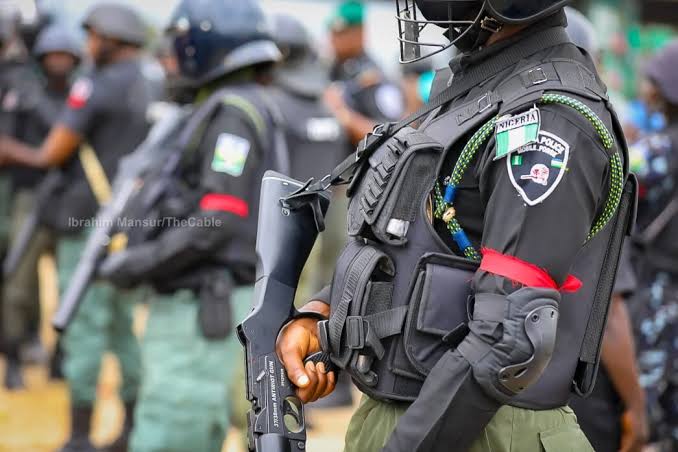
(Nigeria Police. Photo by Punch News)
The Nigeria Police Force has declared that repentant t3rrorists and other former criminals will not be recruited into its ranks, warning community leaders and stakeholders against recommending such individuals for enlistment.
The Deputy Inspector-General of Police in charge of the North-Central Zone, Isyaku Mohammed, made the declaration on Thursday during a stakeholders’ meeting in Ilorin, Kwara State, attended by police officers, traditional rulers, religious leaders, transport union representatives, and other community stakeholders.
Mohammed urged traditional rulers, community leaders, and Divisional Police Officers to be vigilant and refrain from endorsing individuals with criminal records seeking to join security agencies.
“We will not allow repentant criminals to find their way into the Nigeria Police Force,” he said.
Drawing from his experience in the North-East, the DIG recalled public resistance to the reintegration of deradicalised Boko Haram members into communities, noting that residents at a town hall meeting in Yobe had outright rejected the returnees due to the atrocities they had committed.
He warned stakeholders that any criminal recommended to the police would ultimately be deployed back to their own communities.
“So, community heads and other stakeholders should not sign for them. Identify them and expose them.
If you allow them into the system, after training we will send them back to your communities to police your areas, and you will bear the consequences,” he said.
Mohammed also announced plans to inaugurate a joint border patrol operation to strengthen security across Kwara State’s borders with Ekiti, Oyo, Kogi, Niger states, and the Benin Republic, aimed at preventing criminal activities and the movement of criminals across border corridors.
He explained that the stakeholders’ engagement followed a directive by the Inspector-General of Police for senior officers to assess security challenges and improve policing strategies across their zones.
The DIG further advocated community policing as a key crime prevention tool, stressing the importance of timely intelligence sharing and youth engagement as essential strategies for reducing crime and strengthening security across communities.