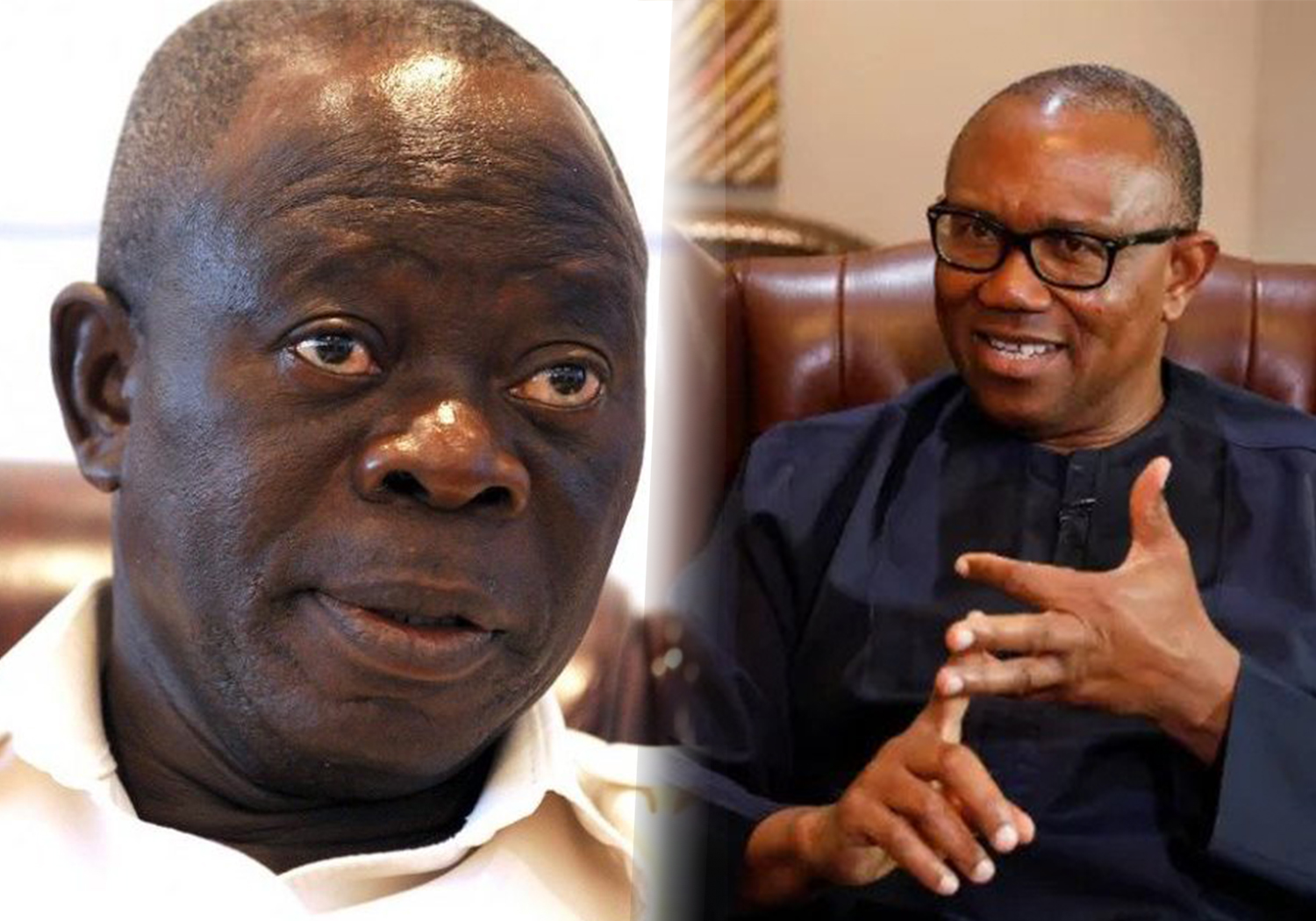
Mr Oshiomhole had alleged that the Bakassi Boys operated unchecked during Mr Obi’s tenure as Anambra governor and that their activities contributed to rising cases of kidnapping and lawlessness in the state.
The Leader of the Nigeria Democratic Congress (NDC) Caucus in the House of Representatives, Afam Ogene, has accused Adams Oshiomhole of distorting historical facts in his criticism of former Anambra State Governor Peter Obi’s handling of security challenges during his administration.
Mr Ogene, in a statement issued on Monday, was responding to recent comments by the former Edo State governor during a podcast interview in which Mr Oshiomhole claimed that the state (Edo) recorded better security outcomes under his administration than Anambra did under Mr Obi.
The senator representing Edo North had questioned Mr Obi’s capacity to address Nigeria’s worsening insecurity, arguing that his record as governor of Anambra did not demonstrate the leadership needed to tackle the country’s security crisis.
Mr Oshiomhole also criticised opposition figures, including Mr Obi and former Vice President Atiku Abubakar, for repeatedly attacking President Bola Tinubu over insecurity while allegedly failing to offer practical solutions to the challenge.
According to the former governor, the roots of Nigeria’s insecurity problems could be traced to previous administrations, including the period when Atiku served as vice president.
He further argued that Mr Obi did not effectively tackle insecurity in Anambra, particularly the activities of the Bakassi Boys vigilante group.
Questioning the former governor’s security credentials, Mr Oshiomhole alleged that the Bakassi Boys operated unchecked during Mr Obi’s tenure and that their activities contributed to rising cases of kidnapping and lawlessness in the state.
“Go back to Anambra State and play back. What were the first major decisions that Governor Willie Obiano took when he succeeded Peter Obi as governor?” Mr Oshiomhole had asked during the interview, suggesting that Mr Obiano introduced measures, including the demolition of properties allegedly linked to kidnappers and members of the Bakassi Boys that were allegedly left unaddressed by his predecessor.
He maintained that security conditions in Edo under his administration compared favourably with those in Anambra under Mr Obi, insisting that the former Labour Party presidential candidate’s record did not justify the perception that he possesses superior solutions to Nigeria’s security challenges.
Responding, Mr Ogene dismissed the claims as “brazen falsehood” and “deliberate misinformation,” accusing Mr Oshiomhole of attempting to rewrite history for political purposes.
He said publicly available records on security management in Anambra during Mr Obi’s administration contradicted the former Edo governor’s assertions.
“Senator Oshiomhole’s revisionist attempt to rewrite history is both laughable and insulting to Nigerians who know the facts. The data on security under Obi’s tenure in Anambra remains public record, and no amount of political grandstanding can erase it,” Mr Ogene said.
The lawmaker further accused Mr Oshiomhole of becoming one of the most vocal defenders of President Tinubu, alleging that the senator frequently attacks political opponents of the administration.
According to him, the senator’s comments reflected a desperate attempt to discredit Mr Obi ahead of the 2027 general elections.
A major point of contention in the exchange is the role of the Bakassi Boys, a vigilante group that gained prominence in South-east states in the late 1990s and early 2000s.
Mr Ogene argued that Mr Oshiomhole’s attempt to link the activities of the group to Mr Obi’s administration was historically inaccurate.
He noted that the Bakassi Boys operated primarily during the administration of former Anambra governor Chinwoke Mbadinuju and that their activities predated Mr Obi’s assumption of office in 2006.
“For the record, the Bakassi Boys operated under the four-year administration of the late Chinwoke Mbadinuju. Yet in his haste to smear Obi, Oshiomhole conveniently erased the three-year tenure of Chris Ngige before Obi assumed office,” Mr Ogene said.
The caucus leader also rejected Mr Oshiomhole’s claim that the demolition of kidnappers’ hideouts began under former Governor Willie Obiano.
According to him, the policy was initiated and implemented during Mr Obi’s administration as part of efforts to combat kidnapping and violent crime in the state.
Mr Ogene further defended Mr Obi’s security record, citing what he described as innovative community-based policing measures introduced by the former governor.
He said Mr Obi laid the foundation for what is now widely discussed as state policing by recruiting, training and equipping security personnel across Anambra’s 177 communities.
The lawmaker argued that the initiative strengthened local intelligence gathering and enhanced collaboration between communities and security agencies.
He also referred to several awards reportedly received by Anambra during Mr Obi’s tenure in recognition of security improvements and governance reforms.
To support his position, Mr Ogene quoted a former Commissioner of Police in Anambra State, Philemon Leha, who served during Mr Obi’s administration.
“As I undertook my assignment in the state, I was greatly encouraged by the commitment and determined focus of Governor Obi. Security was on his priority list, and he always offered us logistics and other support on a scale I had not witnessed elsewhere,” Mr Leha was quoted as saying.
Mr Ogene said the testimony of a former police commissioner who directly supervised security operations in the state carried greater weight than what he described as politically motivated commentary.
“While Oshiomhole peddles fallacies from a podcast chair, those who actually secured Anambra credit Obi’s leadership, logistics and political will. Facts always triumph over propaganda,” he said.
Beyond the dispute over security records, Mr Ogene argued that the increasing criticism directed at Mr Obi from both ruling and opposition politicians reflects growing anxiety over his political relevance ahead of the 2027 presidential election.
He described the attacks on the former Labour Party presidential candidate as coordinated efforts aimed at weakening his political prospects.