….Warns algorithm could block, delay valid polling unit results
Daud Olatunji
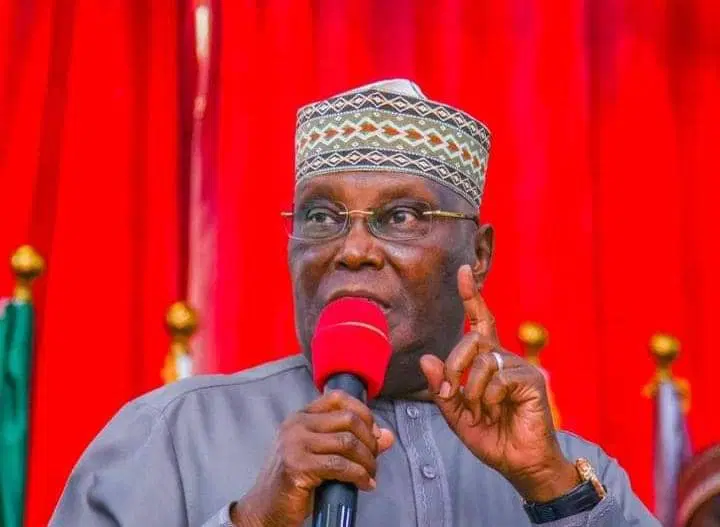
Former Vice-President Atiku Abubakar has demanded an independent audit of the artificial intelligence system being developed by the Independent National Electoral Commission for the 2027 general elections, warning that deploying the technology without adequate transparency could undermine electoral credibility and public confidence.
Atiku, who made the demand in a petition to INEC Chairman on behalf of the African Democratic Congress and other stakeholders, insisted that the commission must subject the system to independent technical scrutiny before integrating it into the management and transmission of election results.
He expressed concern that the proposed AI-powered system could flag, delay, reject or interfere with the transmission of genuine polling unit results if its operational processes and decision-making mechanisms were not properly disclosed.
The former vice-president’s demand was contained in a statement issued on Thursday by Phrank Shaibu, Director of Strategic Communication of the ADC Presidential Campaign Council.
Atiku specifically called on INEC to disclose the system’s source code, training data, operational procedures, discrepancy-detection criteria and the identities of its developers and third-party technology vendors.
He also demanded that independent cybersecurity experts, representatives of political parties and civil society technologists be granted access to examine the technology ahead of the nationwide mock accreditation exercise scheduled for November 28, 2026.
The former Peoples Democratic Party presidential candidate said Nigerians should not be expected to trust an electoral technology whose operational rules and decision-making processes remained inaccessible to independent scrutiny.
INEC cannot ask Nigerians to trust a system whose rules they are forbidden to see. If an algorithm can flag a polling unit result sheet, the public deserves to know what triggers that flag, who set the threshold, who can change it and what happens to the result afterward,” he stated.
Atiku’s concerns centre on INEC’s proposed integration of artificial intelligence and intelligent document processing into the connection between its Data Verification and Authentication System and the INEC Result Viewing portal.
He argued that although technology could improve electoral administration, its deployment must not create another layer of uncertainty in the country’s already sensitive electoral process.
According to him, ordinary technical challenges, including poor lighting, unclear handwriting, damaged papers and other image-quality issues, could cause genuine result sheets to be flagged by the AI system.
He warned that such technical limitations must not become grounds for withholding, delaying or invalidating results legitimately recorded and signed at polling units.
Atiku consequently urged INEC to publish a comprehensive procedure for reviewing results flagged by the system, including the officials responsible for such reviews, how their decisions would be documented, how political parties would be notified and the mechanisms available for challenging erroneous assessments.
He maintained that artificial intelligence should operate strictly as an administrative support mechanism under human supervision and must not be empowered to delete, alter or permanently block election results.
The former vice-president also challenged INEC to reaffirm the legal authority of Form EC8A, the polling unit result sheet completed and signed by the presiding officer and party agents, insisting that the physical document must remain central to resolving disputes arising from electronic assessments.
A machine’s verdict cannot be allowed to quietly displace the evidence witnessed by voters and party agents,” he added.
Beyond the proposed independent audit, Atiku called for the creation of a dedicated monitoring dashboard through which political parties could obtain real-time information on results flagged by the AI system, upload delays and blocked submissions during the elections.
He also urged the National Assembly to summon INEC’s leadership and its Information and Communication Technology Directorate to explain the technology’s architecture, safeguards, accountability mechanisms and independent audit arrangements.