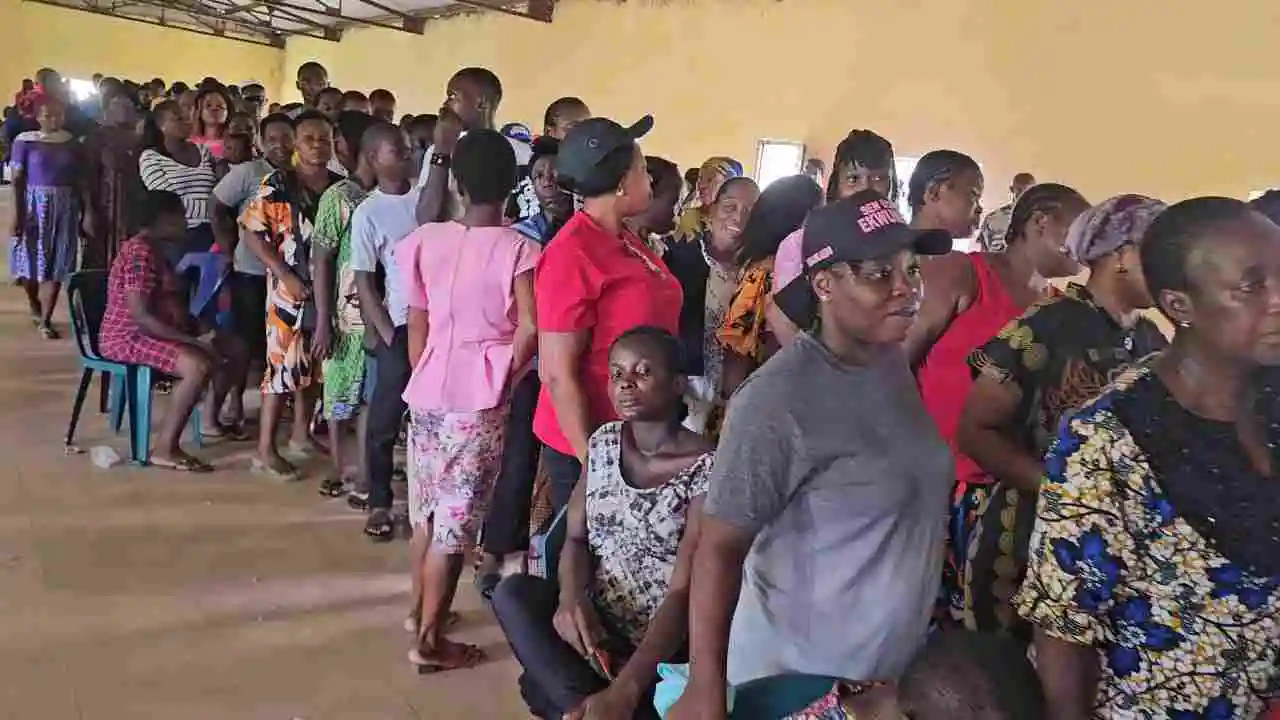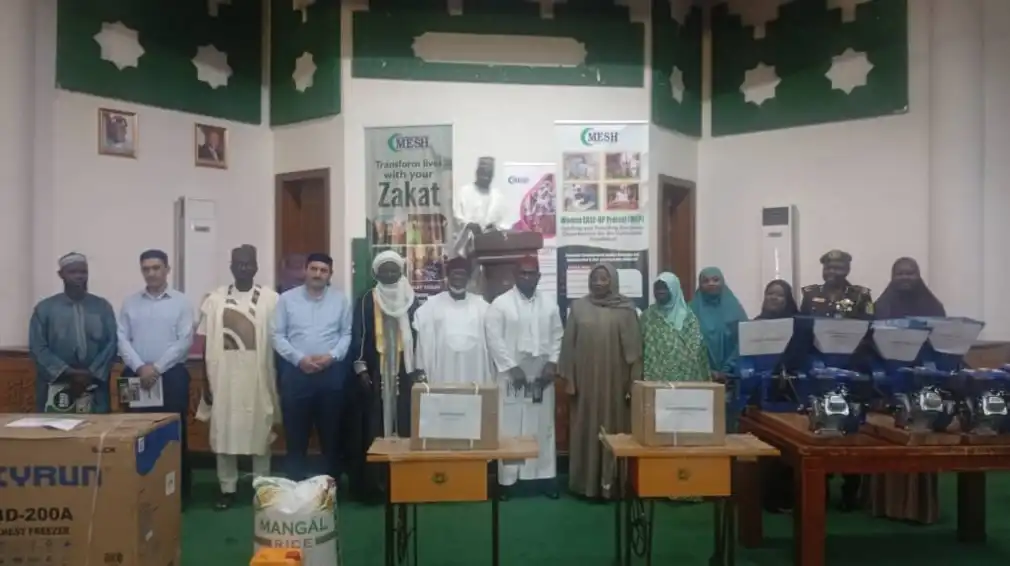
The Mission for Education, Social and Health (MESH) has expanded its humanitarian support programme with the empowerment of more than 1,600 vulnerable Nigerians through its Zakat distribution initiative.
The intervention, which was unveiled during the second edition of the organisation’s Zakat Distribution Programme in Abuja, focused on providing financial support and working tools to indigent individuals and struggling families across the Federal Capital Territory (FCT).
MESH, a subsidiary non-governmental organisation under the Nigerian Supreme Council for Islamic Affairs (NSCIA), distributed cash gifts and income-generating equipment including refrigerators, tailoring machines, grinding machines, and Point of Sale (POS) machines to selected beneficiaries.
Speaking during the event, the Chief Executive Officer of MESH, Dr Aminu Hayatu, said the initiative was designed not only to provide immediate relief but also to help vulnerable Nigerians become financially independent.
According to him, the organisation worked closely with groups, agencies, and community partners to identify deserving beneficiaries across different categories of vulnerable persons.
“We identify vulnerable groups such as widows, persons with disabilities, and those who are economically disadvantaged,” Hayatu said.
“We also developed a monitoring and evaluation framework to follow up on beneficiaries and assess how they are utilising the support provided, as well as offer guidance where necessary.”
Hayatu explained that the latest edition of the programme was intentionally organised as a public distribution to encourage more individuals and organisations to support humanitarian causes through Zakat and charitable giving.
“This is the second public distribution. We also carry out non-public distributions, but this edition is symbolic because we want to encourage existing donors and attract new ones to continue supporting the vulnerable in society,” he said.
He noted that MESH was placing stronger attention on economic empowerment by ensuring beneficiaries receive tools capable of helping them start or strengthen small businesses.
“We want beneficiaries to move from dependency to productivity so that, over time, they can also contribute to society,” he added.
The organisation said its broader objective is to create a system where vulnerable Nigerians are not only supported financially but also equipped with practical means of livelihood that can improve their long-term economic conditions.
Chairman of the Board of Trustees of MESH, Alhaji Rasaki Oladejo, described Zakat as an important institution in Islam with the capacity to reduce poverty and improve social welfare if properly implemented.
Represented by Prof. Salisu Sheu, MESH Overseer and Deputy Secretary-General of NSCIA, Oladejo said the initiative reflected the true purpose of Zakat as a tool for economic balance and social support.
“Zakat is not merely an act of charity; it is a divine obligation designed to promote equity, reduce poverty, and strengthen social cohesion,” he said.
“Through Zakat, wealth circulates within the community, ensuring that those blessed with abundance support those facing hardship.”
He disclosed that the first edition of the programme was held across the FCT, Jigawa, and Ogun States, where over 1,000 beneficiaries received support, while the current phase concentrated mainly on residents of Abuja.
According to him, the programme goes beyond cash distribution because beneficiaries are also given practical tools that can help them build sustainable sources of income.
“As can be seen, it is not just about giving cash; beneficiaries are also given tools that empower them economically so they do not remain dependent,” he said.
“We hope that by the next edition, many of today’s beneficiaries will be in a position to support others, even if not through Zakat, but through voluntary charity.”
Chairman of the occasion, Muhammad Maidoki, said Nigeria could significantly reduce poverty and social challenges if charitable systems such as Zakat and Waqf are strengthened and institutionalised properly.
He stressed that organised charitable giving can help address economic hardship and insecurity affecting many communities across the country.
Also speaking at the programme, the Attorney-General of the Federation and Minister of Justice, Lateef Fagbemi, commended MESH for sustaining initiatives that support vulnerable Nigerians.
Represented by Hajiya Medinah Hassan, Assistant Chief State Counsel, Fagbemi said the organisation’s activities continue to contribute to improving education, health, and social welfare for disadvantaged groups.
“As we witness the distribution of support to deserving beneficiaries, we are reminded of our collective responsibility to build a society where no one is left behind,” he said.
“Through acts of charity and solidarity, we can help create opportunities for families and young people to live with hope, dignity, and purpose.”